About Our Cattery
About Our Ragdoll Cattery
A small Ragdoll cattery in an Sedona home. This page is about the house, the rooms the kittens grow up in, what the cats eat, and how we work with the families who buy from us. If you want the breed itself, that is the Ragdoll page.
The house
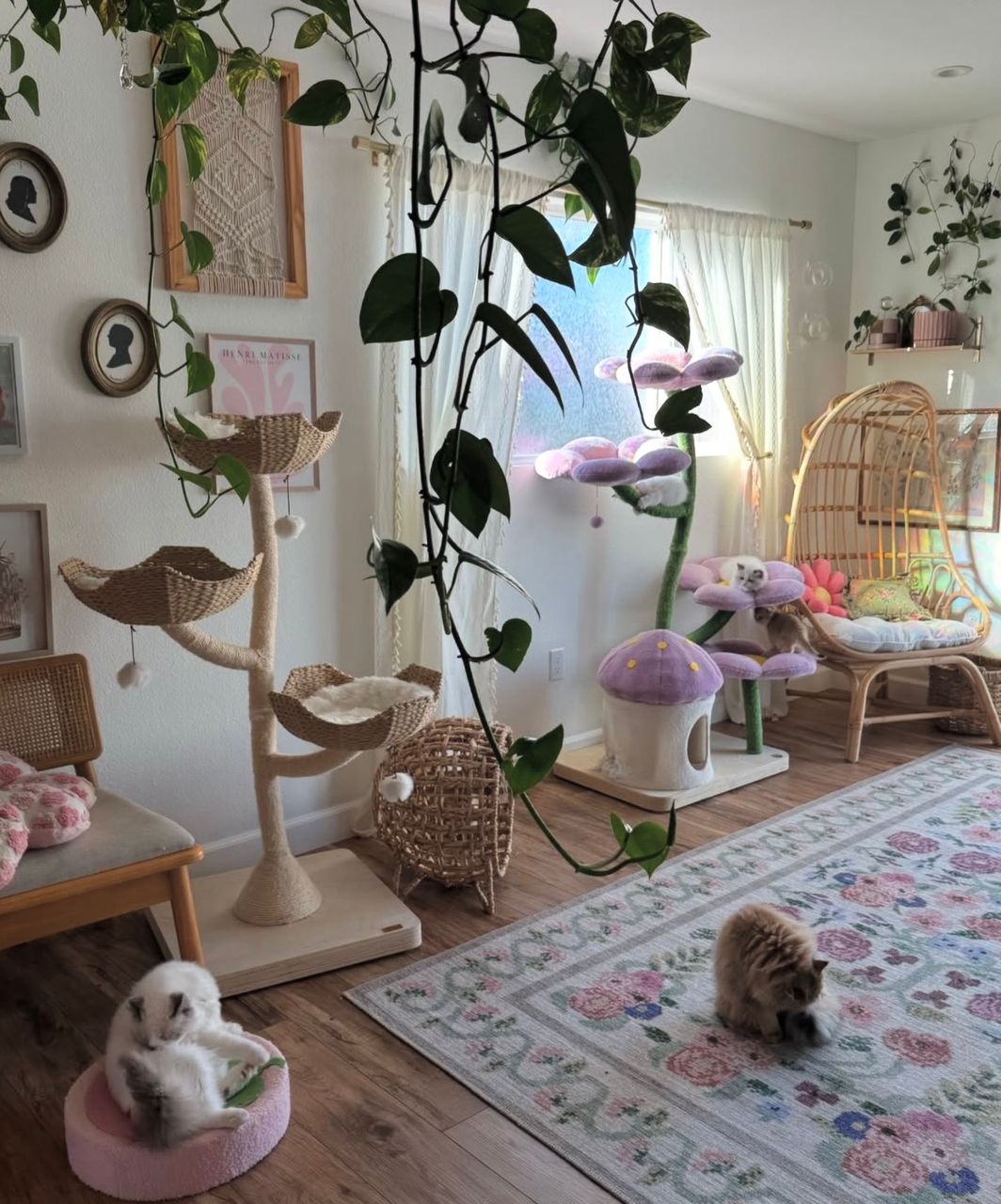
Celestial Ragdolls is run from our home in Sedona, and the cats live in it the way a family's cats do. There is one room set aside as the nursery, with a whelping bed, a heat mat, the litter trays and a door that is left open, and every other room belongs to everyone. Our queens are pets that have kittens, not breeding stock kept for the purpose, and it shows in the kittens.
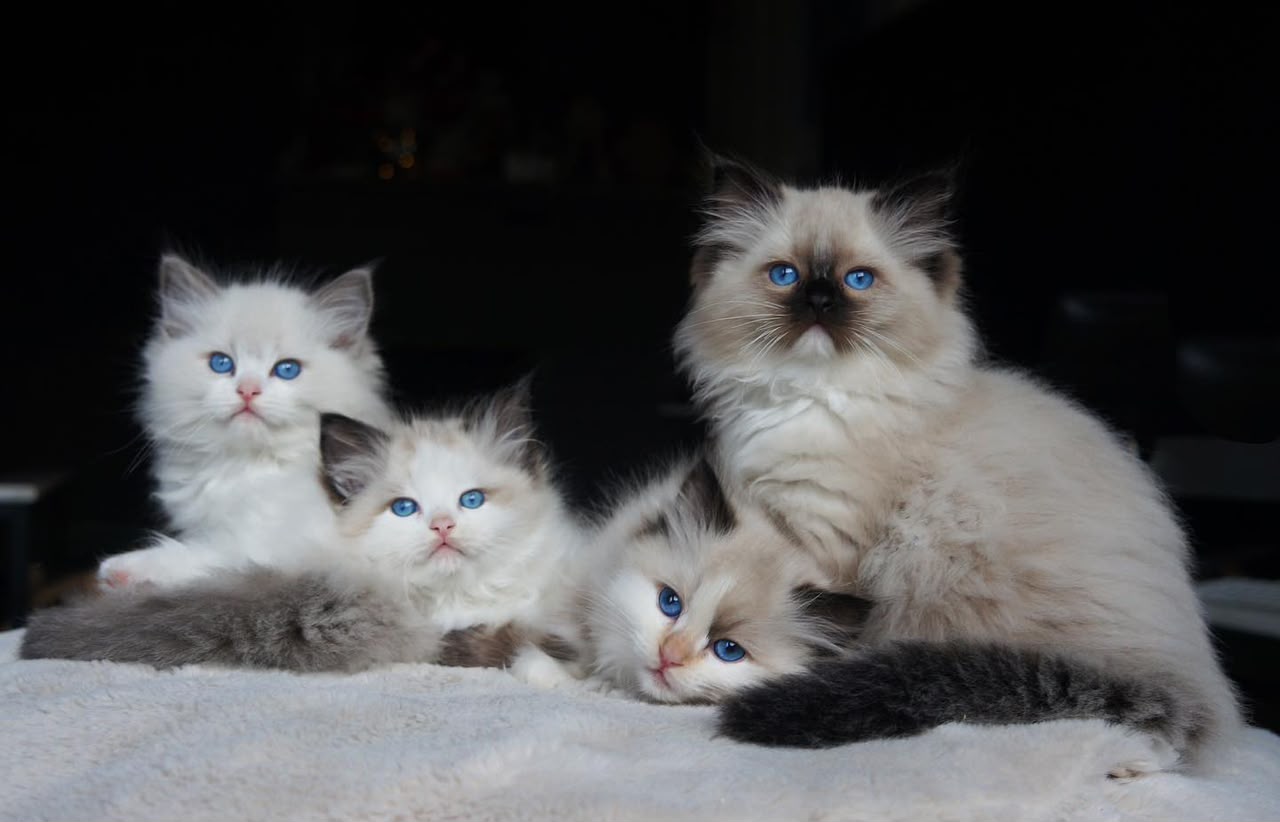
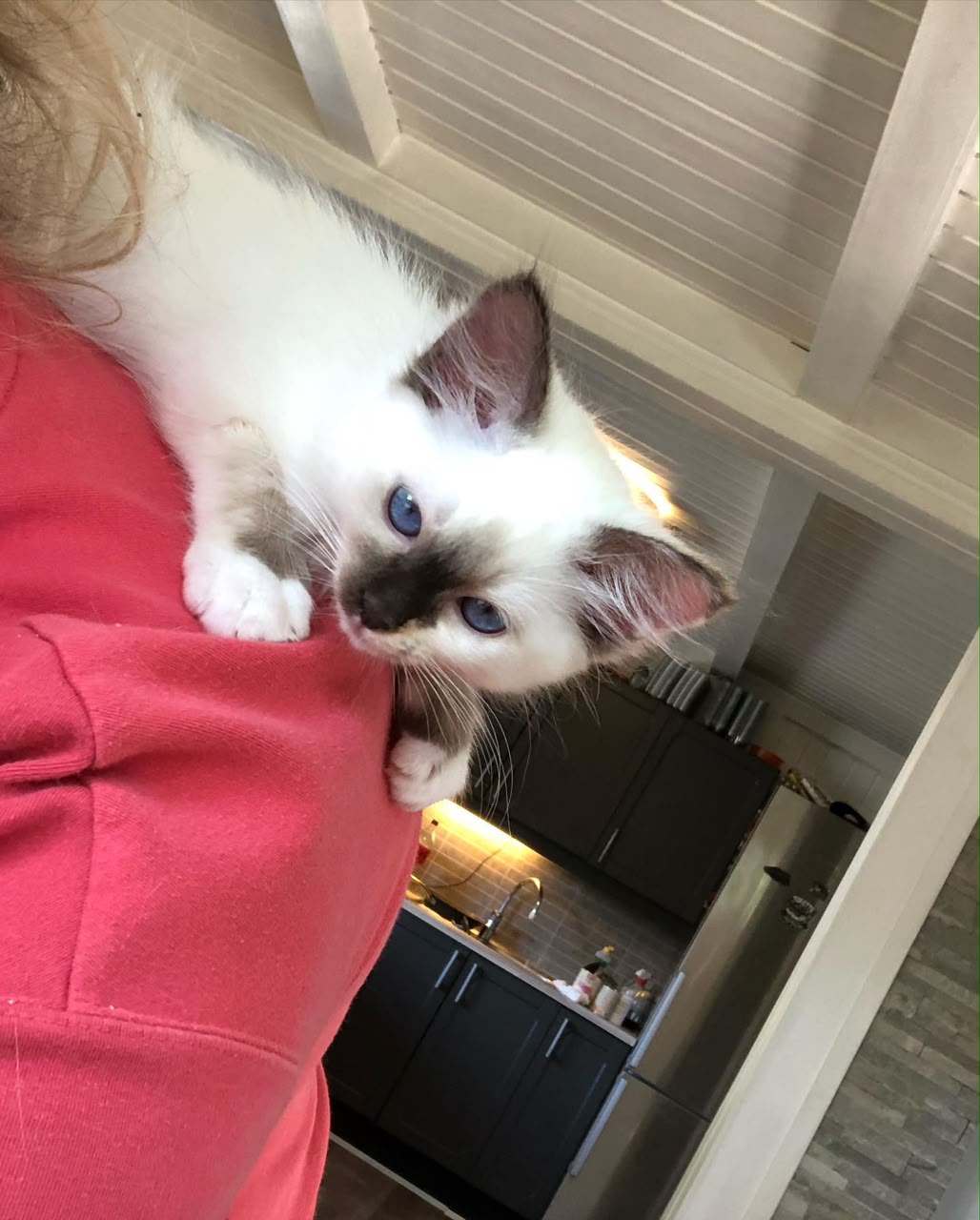
A litter spends its first three weeks in the nursery with its mother, eyes closed, ears folded, doing nothing but feeding and sleeping. From three weeks, once they can stand, the pen comes into the living room. From five weeks they have the run of it. By eight weeks they have been picked up several times a day by people of every size, have met the dog, have slept through the vacuum cleaner and the television, and use a litter tray without being shown twice. By twelve weeks they are ready for a home, and they leave calm because nothing in a home is new to them.
What the cats eat
Our adults eat a rotation of good-quality dry food left down all day, a wet meal morning and evening, and raw meat two or three times a week: chicken necks for their teeth, and kangaroo or beef mince. Kittens are weaned from four weeks onto a wet kitten food softened with kitten milk, then onto a kitten dry food and the same wet food, and by eight weeks they eat what they will eat in your house. Every kitten goes home with a week of its own food so you can change over slowly, and the written guide tells you what to move to and when.
Ragdolls are slow-growing cats that carry a natural fatty pad on the belly, and the mistake people make is to feed a young adult like a kitten for too long. We tell every family how much and when, and we say it again at six months when the growth slows.
What we do before a kitten leaves
- FVRCP vaccination. Protects against feline viral rhinotracheitis, calicivirus and panleukopenia, the three the core vaccine covers in the United States. The first dose is given at six to eight weeks and the second at ten to twelve weeks, both before the kitten leaves us. A third dose at fourteen to sixteen weeks is for your vet, and the record shows when it is due.
- Worming. From two weeks old and every two weeks until twelve weeks, then monthly. Each date is on the record.
- Flea treatment. Kitten-safe treatment before go-home day, with the product and date noted.
- Vet check. Every kitten is examined by our vet before it goes home: heart, eyes, ears, mouth, umbilicus and coat.
- Microchip. Implanted before the kitten leaves, registered in your name from day one so a lost cat comes back to you.
Everything above is written on the record that goes home with the kitten, with the product and the date, so your own vet can pick up exactly where ours left off. What the twelve weeks in this house look like, week by week.
Visitors
We are a closed cattery: we do not have visitors through the house. A kitten's vaccinations are not complete until sixteen weeks and a virus carried in on shoes or hands can go through a litter in days. Families in Arizona meet their kitten in person at a place and time we schedule, before paying. Families further away see photographs of the kitten, taken the day they ask, and meet it at the airport. We know this costs us a few buyers who want to walk through a house, and we would rather lose those sales than a litter.
After the kitten goes home
You have our number and our email for the life of the cat, which for a Ragdoll is twelve to seventeen years. Most families write in the first week with a question about food or the litter tray, again at six months when the cat suddenly weighs twice as much, and then, often, send photographs at Christmas for years. If your circumstances change and you can no longer keep the cat, it comes back to us, whatever its age. That is in writing before you pay.
The kittens here now
Raised in the rooms above. Each one is on the kittens page, with its photographs, color, sex and age.
See the kittens we have now Ask about a kitten (928) 701-7668