Colors & Patterns
Ragdoll Colors and Patterns
A Ragdoll is named by its color and its pattern together: seal bicolor, blue mitted, cream point. This page explains both halves of the name from the cats in our own house, shows how the color comes in, and says which we breed.
Why every Ragdoll is born white
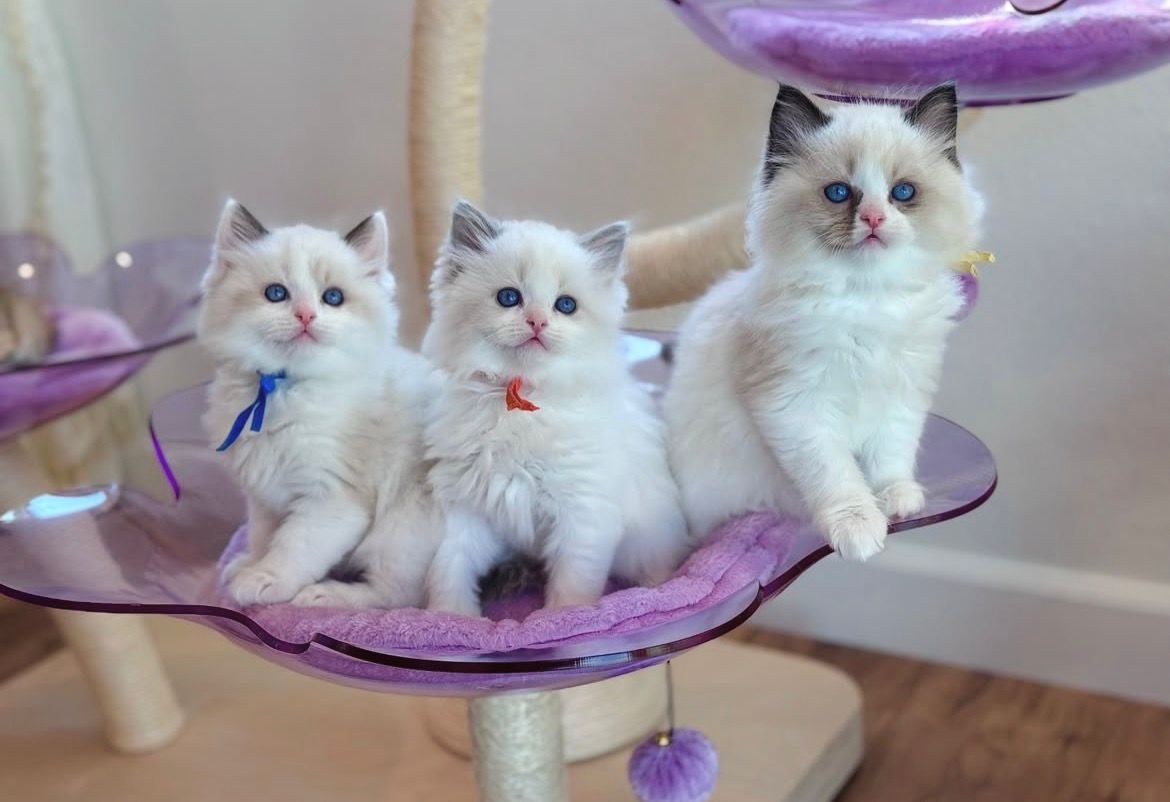
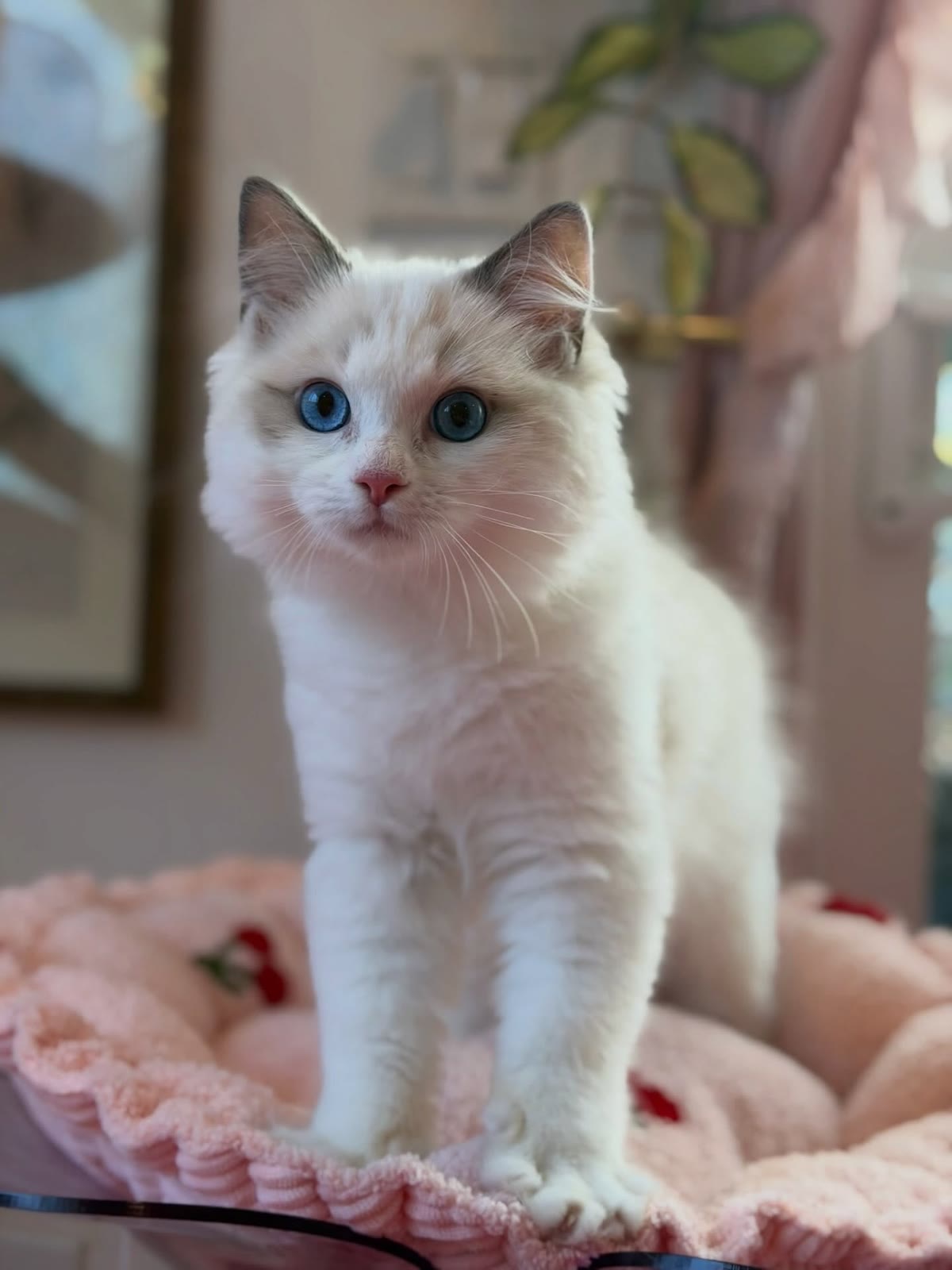
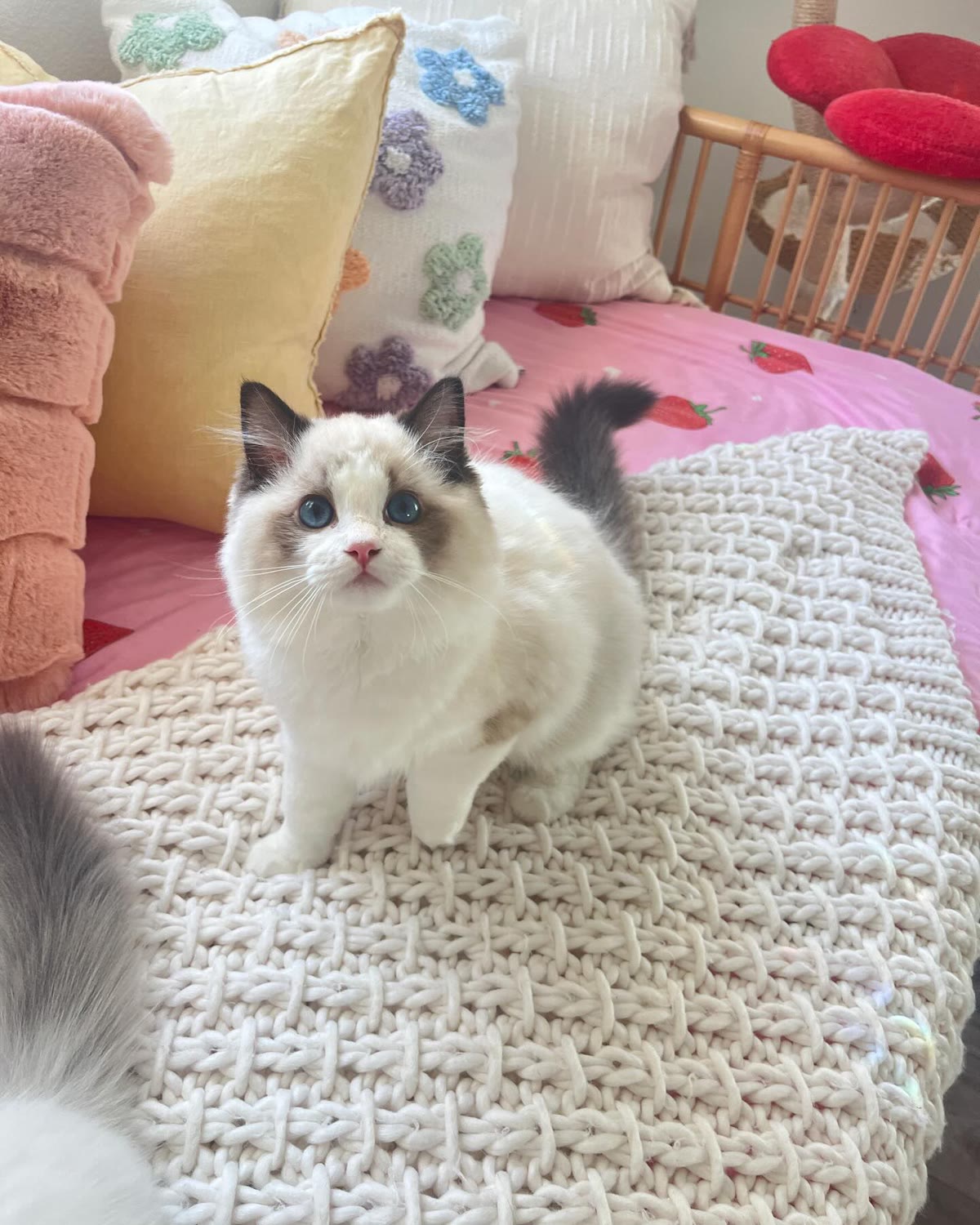
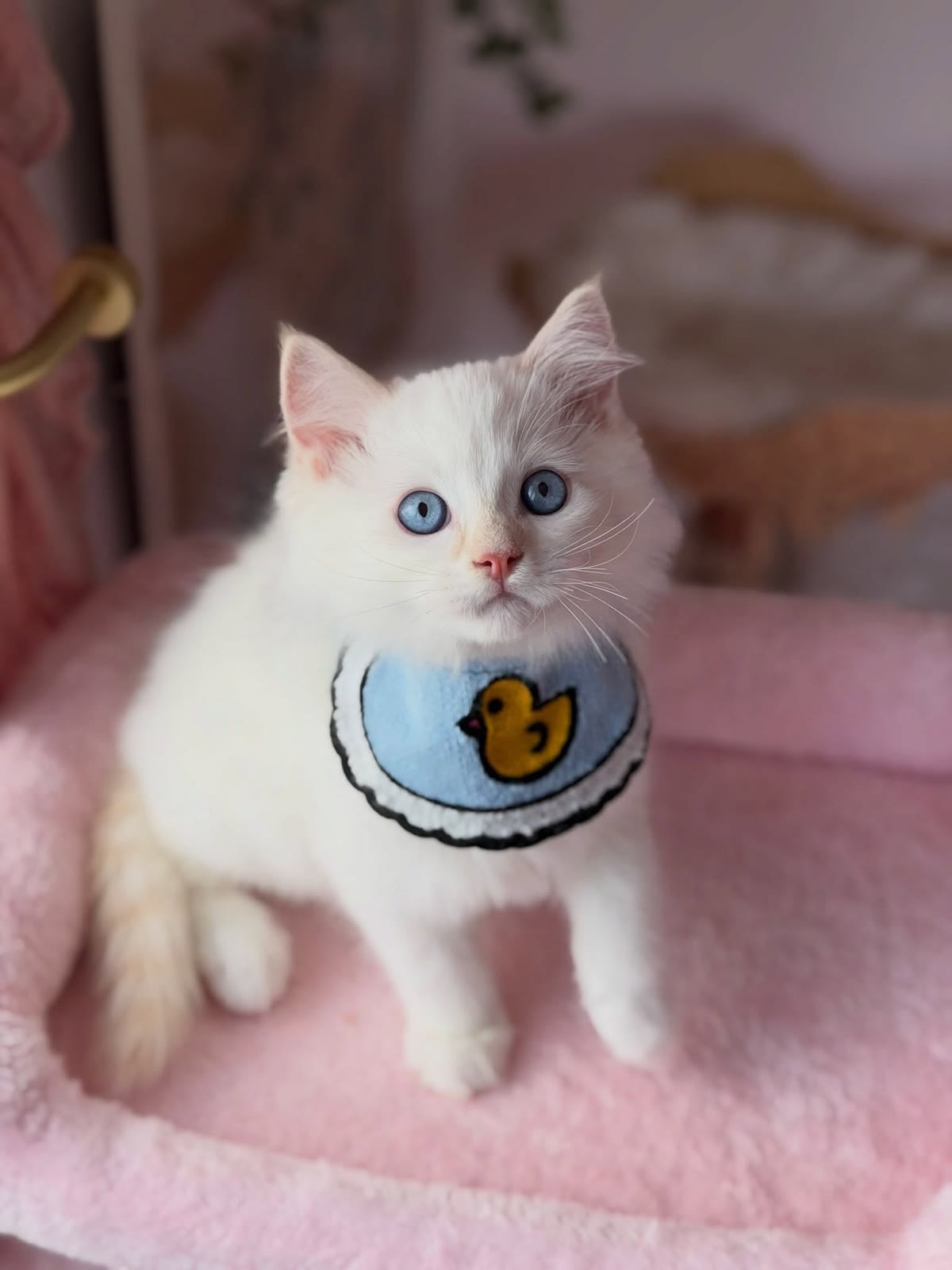
Ragdolls are pointed cats. The gene that makes the color is temperature-sensitive: it only works in the cooler parts of the body, so pigment forms on the face, the ears, the legs and the tail and stays pale on the warm body. In the womb everything is warm, so a kitten is born white. The ears and the tail tip are the first to cool and the first to color, at about five to ten days. By eight weeks the pattern is plain. By a year the color is what it will be, and by three or four years it has deepened to its final shade. Our older kittens are eleven weeks old in their photographs and already very different from each other; our youngest, at eight, is still nearly white.
The six colors
All pointed Ragdolls are one of six colors, three pairs in which the second is the dilute of the first.
- Seal is genetically black. The points are a deep, cool brown, nearly black at the ears, on a body that shades to fawn. The most common color and the one people picture. Pearl and Bambi are seal.
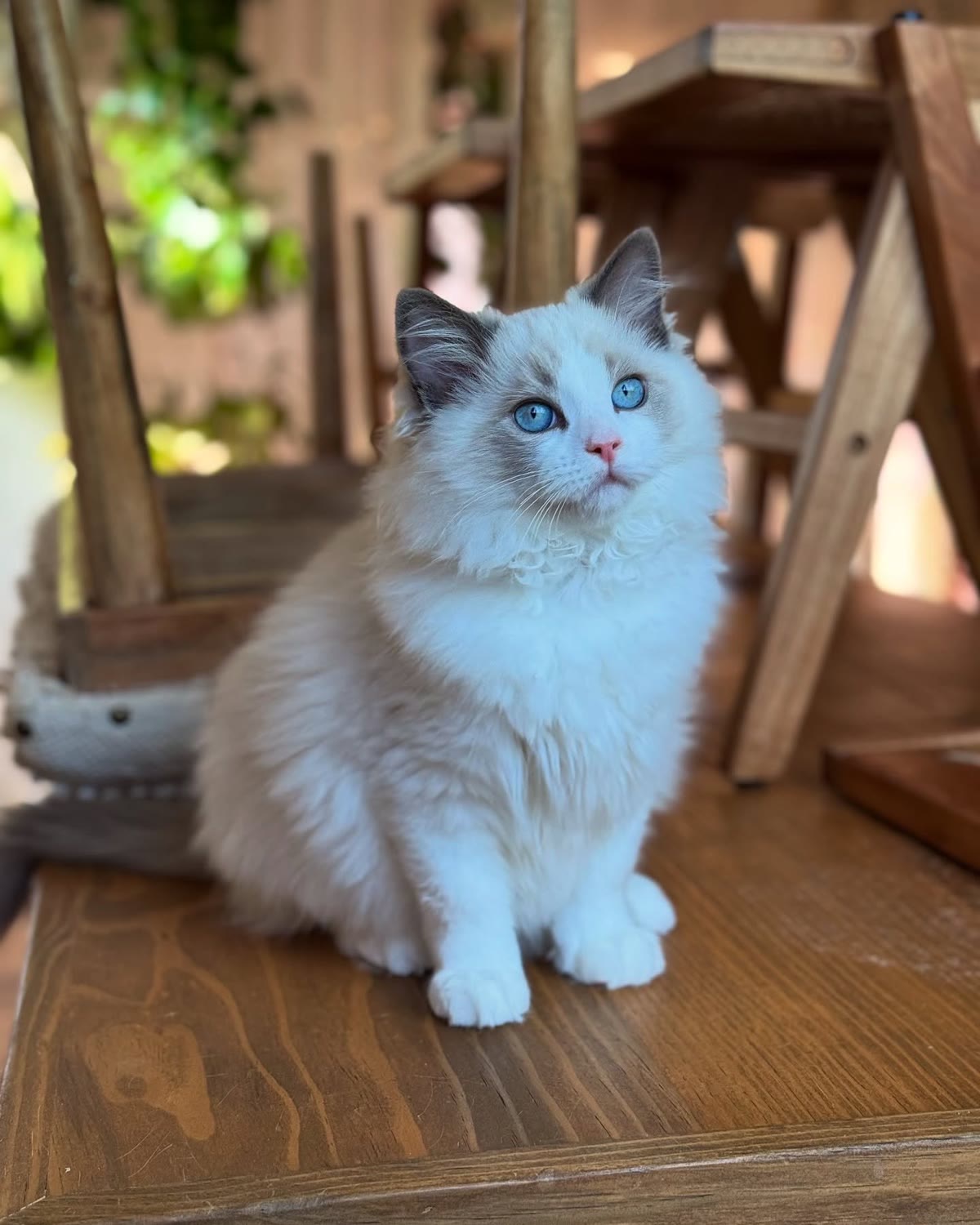
- Blue is the dilute of seal: slate gray points on a bluish-white body. The color of our queen, and of Ace and Milo. People call it gray.
- Chocolate is a warm milk-chocolate brown with a pink-toned nose, rarer than seal and often confused with it. We do not currently breed it.
- Lilac is the dilute of chocolate, a pale pinkish gray, and the rarest of the classic four. We do not currently breed it.
- Flame, also called red, is orange points on a white body. Almost always male.
- Cream is the dilute of flame, the palest Ragdoll of all, apricot points that take years to show. Rossi is cream.
The three patterns
- Colorpoint has no white anywhere: a colored face, ears, legs and tail on a pale body, with a nose and paw pads the color of the points.
- Mitted is a colorpoint with white mittens on the front paws, white boots behind, a white chin and a white stripe down the belly, and sometimes a white blaze on the nose.
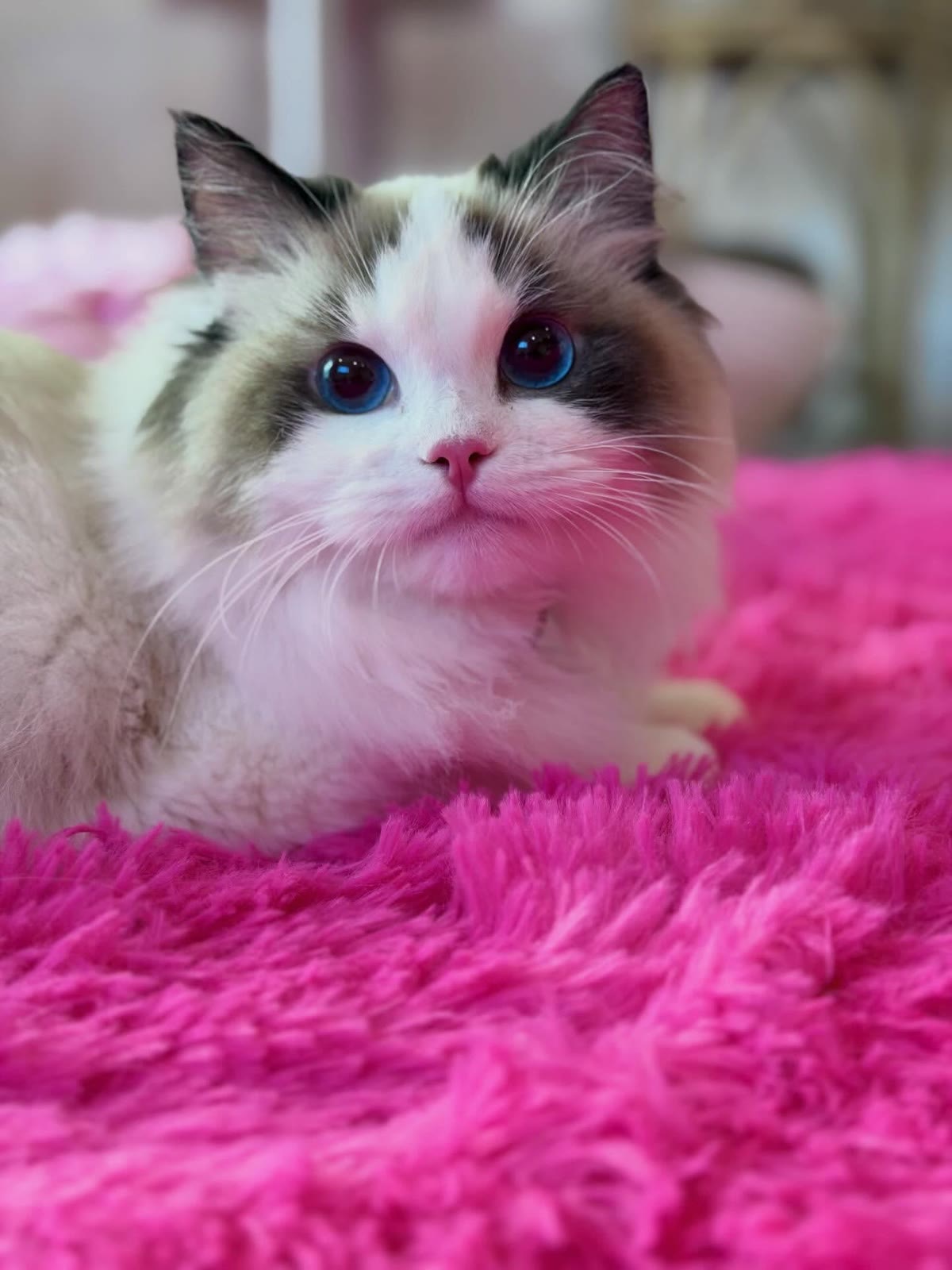
- Bicolor has the white inverted V on the face, white legs, a white chest and belly, and a pink nose, with color on the ears, the mask outside the V, the tail and a saddle on the back. Four of our five kittens are bicolor.
The two overlays
Lynx adds tabby striping to the points and white eyeliner round the eyes; any color and pattern can be lynx. Tortie adds patches of red or cream to a seal, blue, chocolate or lilac cat and is almost always female. We do not currently breed either, and say so because a buyer searching for one deserves a straight answer.
Eyes
Every pointed Ragdoll has blue eyes, from pale sky to deep sapphire, and the depth of the blue is not linked to the color of the coat. Our queen's are the darkest we have seen; Rossi's, at eight weeks, are still the pale blue of a young kitten and will deepen.
What we breed
Seal and blue, in bicolor and colorpoint, with cream appearing when the pairing allows it. Chocolate, lilac, lynx, tortie and mink are not in our lines and we will not describe a kitten as one of them to make a sale.
What "brown", "gray" and "white" mean
People search for brown, gray and white Ragdolls and none of those is a color the breed uses. A brown Ragdoll is a seal, or occasionally a chocolate. A gray Ragdoll is a blue. A white Ragdoll is a kitten whose color has not arrived yet, or a cream or lilac adult whose color is so pale it reads as white from across a room. Each has its own page because each is a real question.
Our kittens, by color
5 available now, $800 each.
Choosing by color
Tell us the color you have in mind in the questionnaire and we will show you the kittens that will grow into it.
See the kittens we have now Ask about a kitten (928) 701-7668