Born White
White Ragdoll Cat
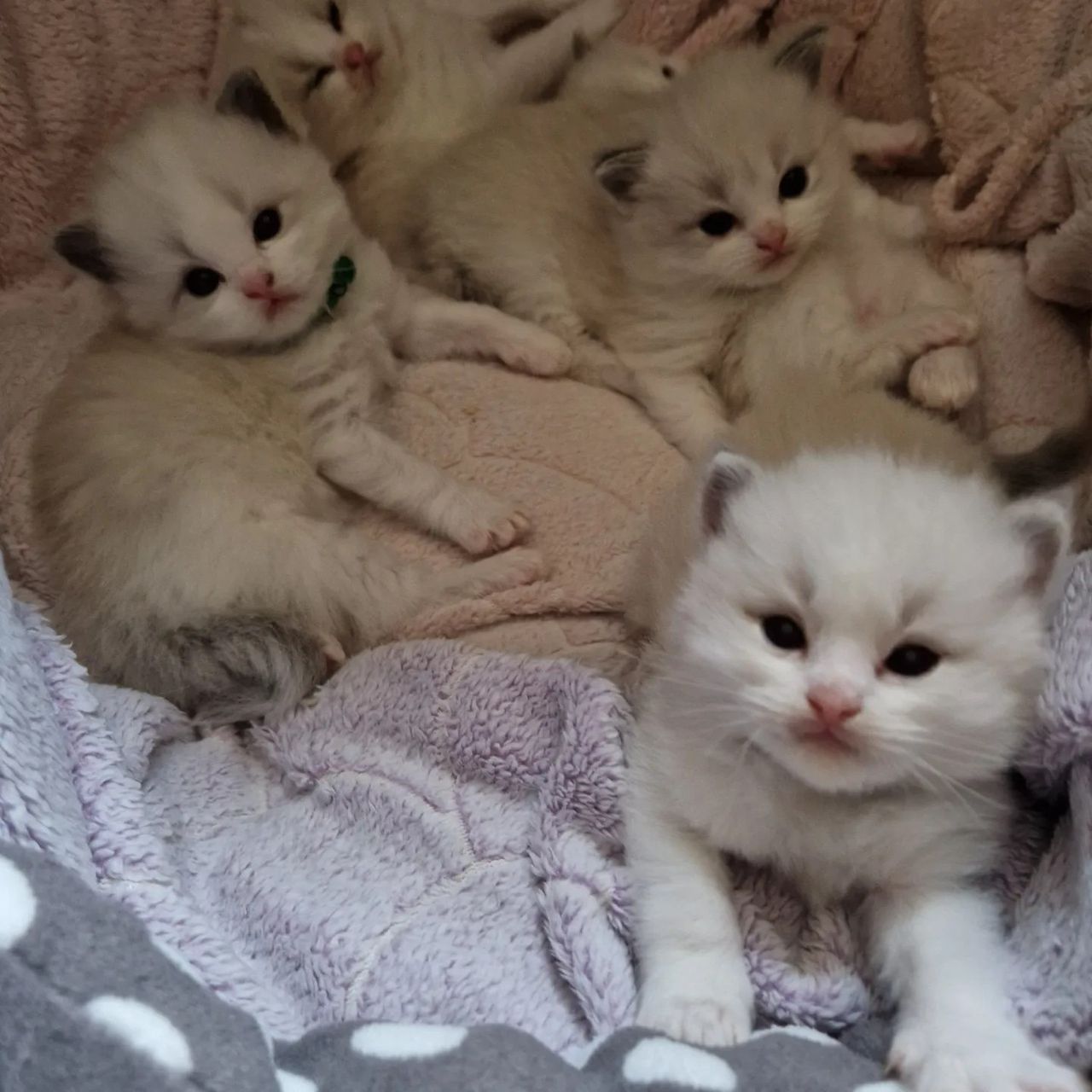
Every Ragdoll kitten is born white and stays nearly white for weeks. People searching for a white Ragdoll are usually looking at a photograph of a kitten whose color has not arrived, or at a cream or lilac adult so pale it reads as white across a room. This page explains why, when the color comes, and what a white adult Ragdoll actually is.
Why Ragdoll kittens are born white
A Ragdoll is a pointed cat. The enzyme that makes its pigment is heat-sensitive and only works below normal body temperature, so pigment forms on the cooler parts of the body, the ears, the face, the legs and the tail, and not on the warm trunk. In the womb a kitten is warm all over, so it is born with no pigment anywhere. It is not a white cat; it is a colored cat whose color has not been switched on yet.
When the color arrives
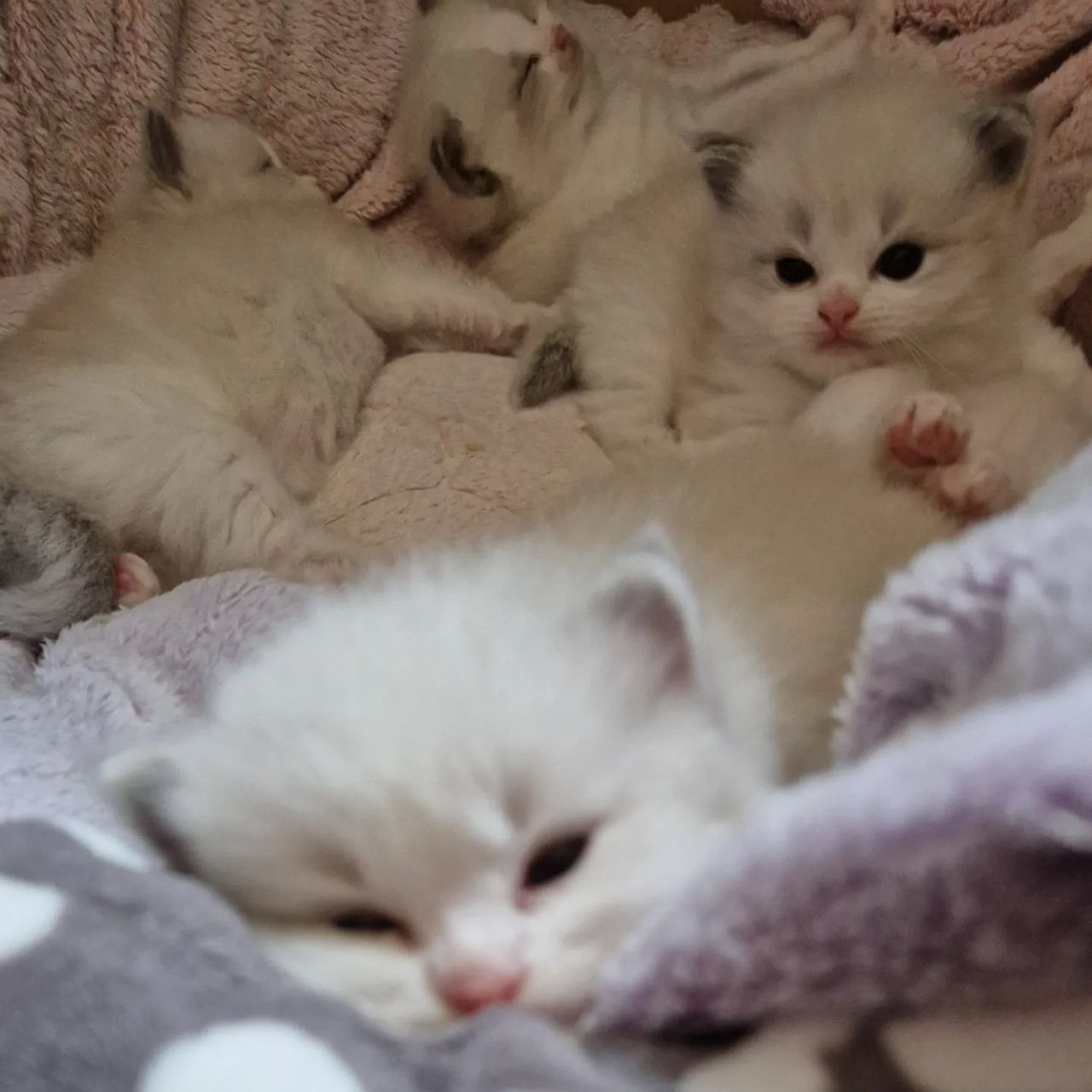
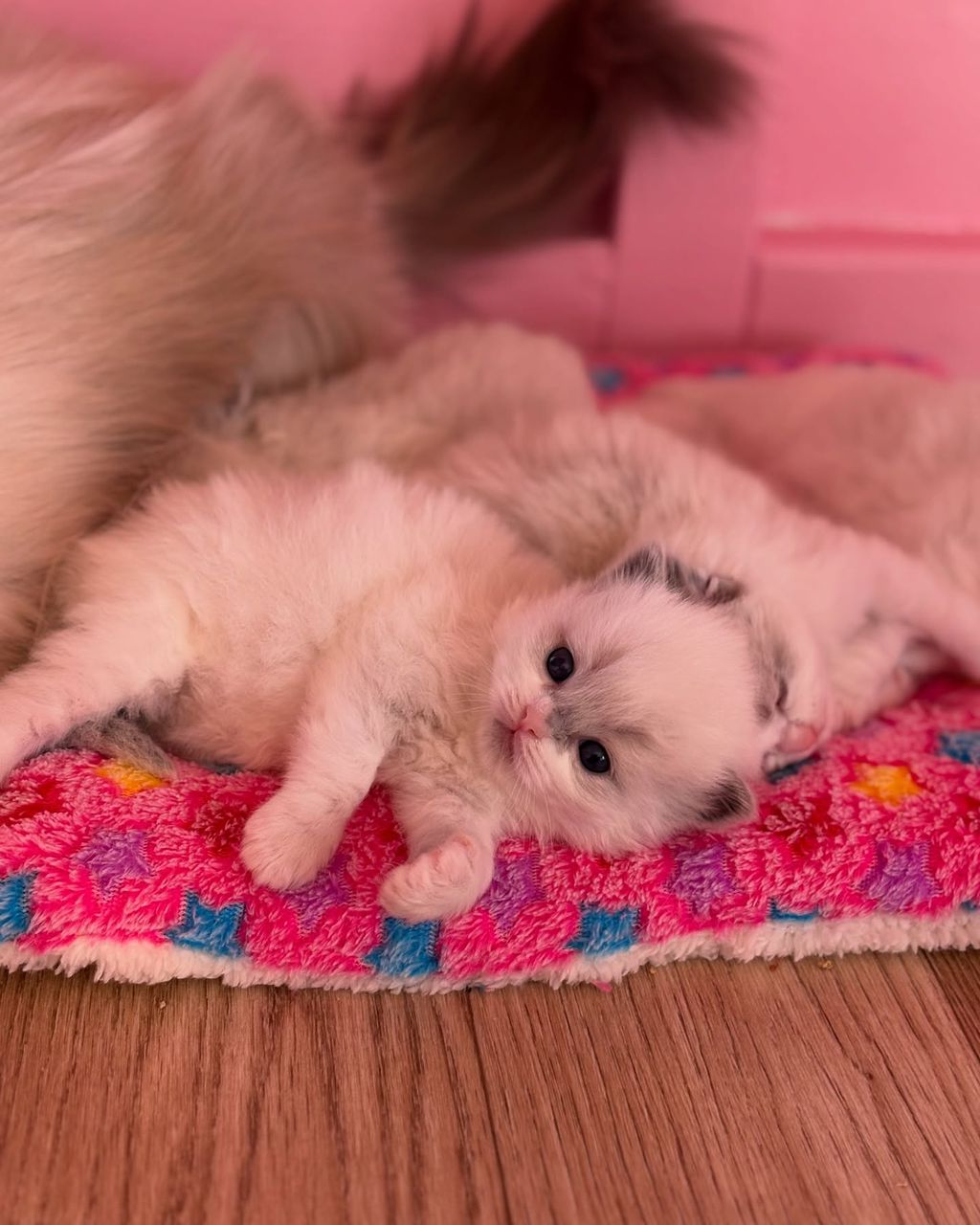
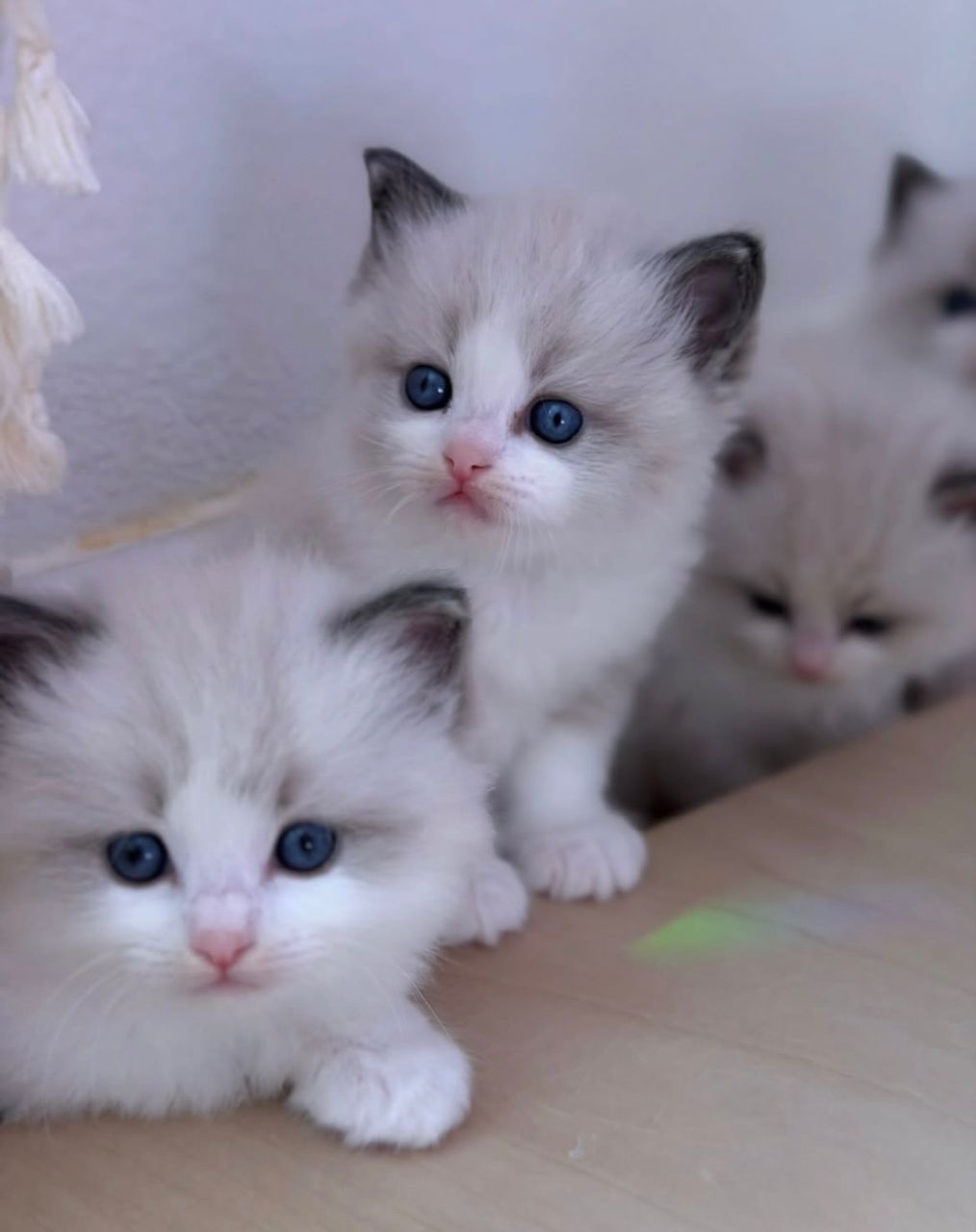
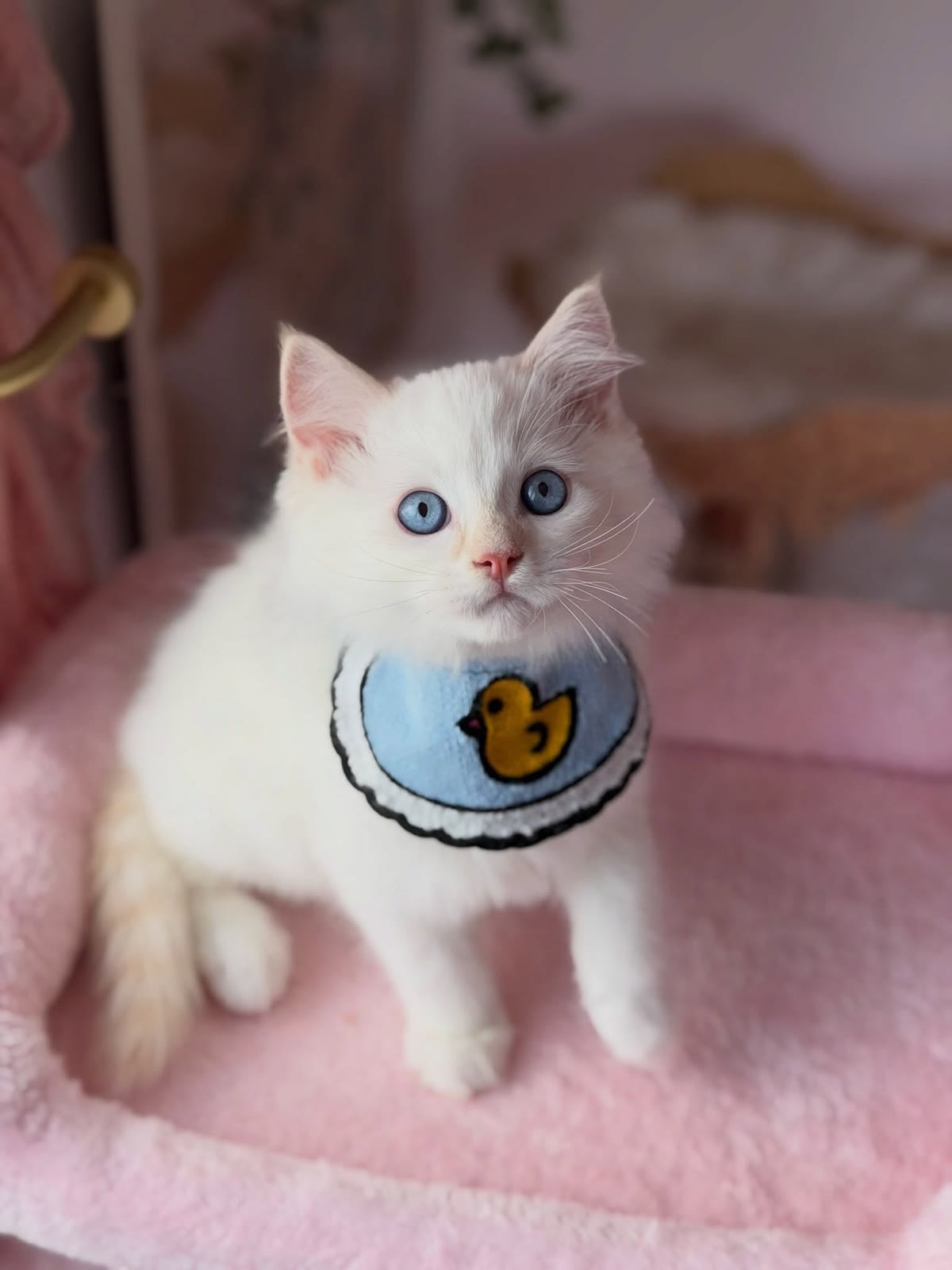
The order is always the same: ears, then tail, then the mask and legs, then the body shading over years. The speed depends on the color. Seal shows in the first week. Blue takes three or four. Cream can take two months to show at all and a year to be obvious. Rossi is a cream point at eight weeks in the photograph at the top of this page, and she is the reason this page exists: people see her and ask for the white one.
What a white adult Ragdoll is
One of three things. A cream point, whose pale apricot points on a white body read as white from a distance. A lilac point, whose frosty pink-gray points on a magnolia body do the same. Or a blue-eyed white, a cat carrying the dominant white gene brought in from another breed, which masks whatever color is underneath; those cats are not pointed Ragdolls and not every registry accepts them. We breed the first and would tell you honestly if a kitten of ours were the third.
Why the palest Ragdolls are the hardest to photograph
A white body against a white blanket in daylight loses the points entirely. If you are choosing a pale kitten from photographs, ask for one taken on a dark background in shade, and ask to see the tail, which is always the first place the color shows.
Keeping a pale coat pale
A cream or lilac shows every mark. A damp cloth under the eyes each day, a brush twice a week and a litter that does not dust are the whole routine. Ragdolls rarely need bathing and a pale one needs it no more often than a seal; it just shows the need sooner.
The palest kittens available now
One available now, $800 each.
01
Are all Ragdoll kittens born white?
Yes, every pointed Ragdoll, whatever color it will become. The white spotting of a bicolor or mitted is present at birth but there is no color yet for it to contrast with.
02
Is there a pure white Ragdoll?
Not a pointed one. The palest adult Ragdolls are creams and lilacs, which read as white from a distance. Some catteries breed a blue-eyed white by introducing the dominant white gene from outside the breed; those cats are not pointed and are not accepted by every registry, and we do not breed them.
03
When will I know what color my kitten is?
Seal and chocolate by a week or two. Blue by three or four weeks. Lilac, flame and cream by six to eight weeks, sometimes later. A reputable breeder will tell you when they are sure and not before.
Looking for the white one?
Rossi is a cream point, $800, and will stay the palest cat in the room. All the kittens.
See the kittens we have now Ask about a kitten (928) 701-7668