Blue Point
Blue Point Ragdoll Kittens
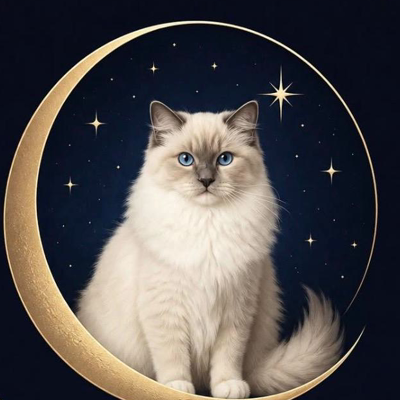
Blue is the slate-gray Ragdoll, the dilute of seal, and the color of our queen. Ace and Milo are blue. This page shows how blue comes in from a white newborn, what it looks like grown, how to tell it from lilac, why people call it gray, and the blue kittens we have now.
What blue means
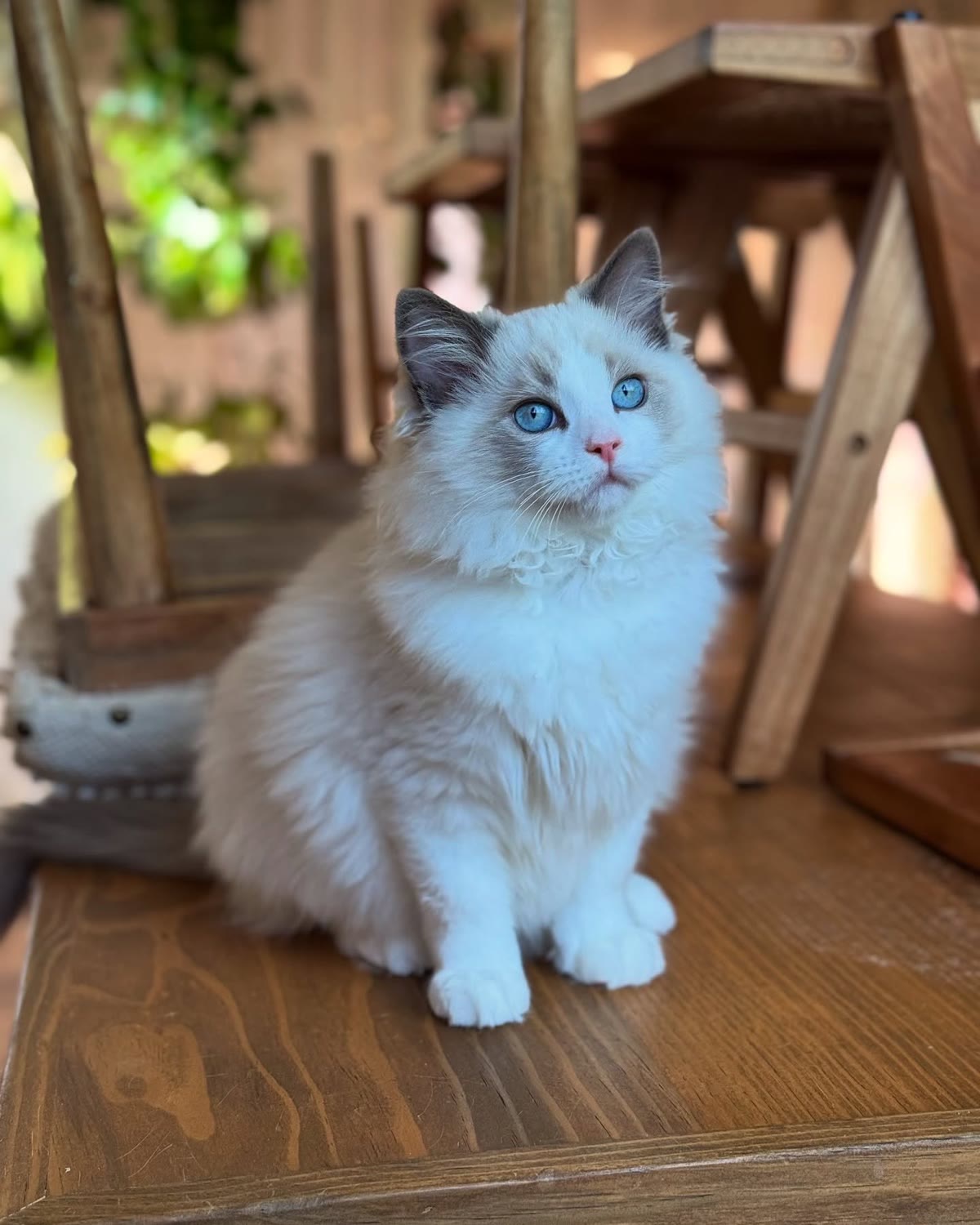
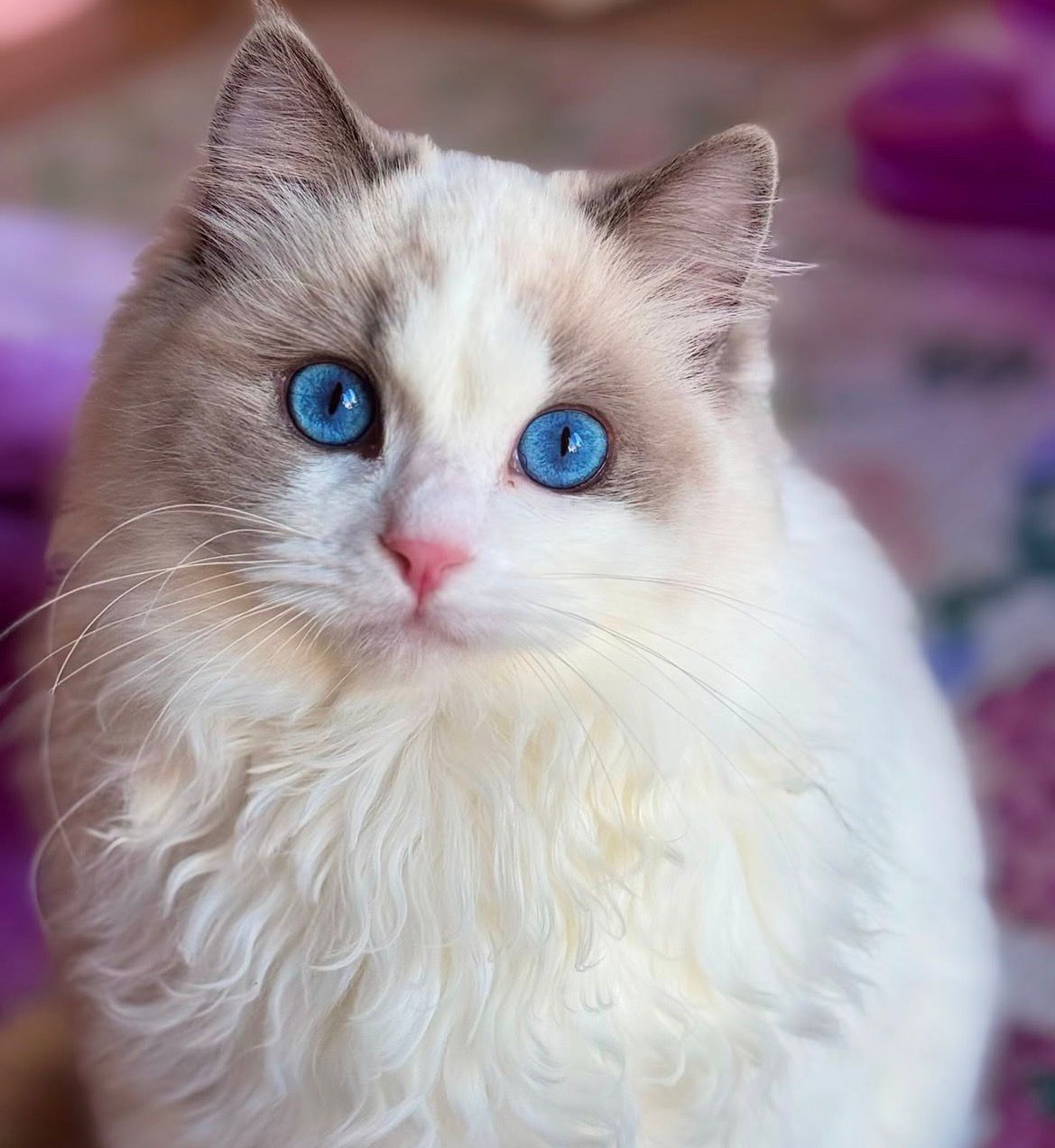
Blue is seal with the pigment thinned by the dilution gene. The points are slate gray, cool and even, with none of the brown that a seal shows, and the body is a bluish white that shades to a soft gray on the back with age. Nose leather and paw pads on a blue colorpoint are slate; on a blue bicolor like our queen the nose is pink inside the white V. In sunlight a blue Ragdoll has a faint sheen that photographs badly and looks lovely in the room.
How the color comes in
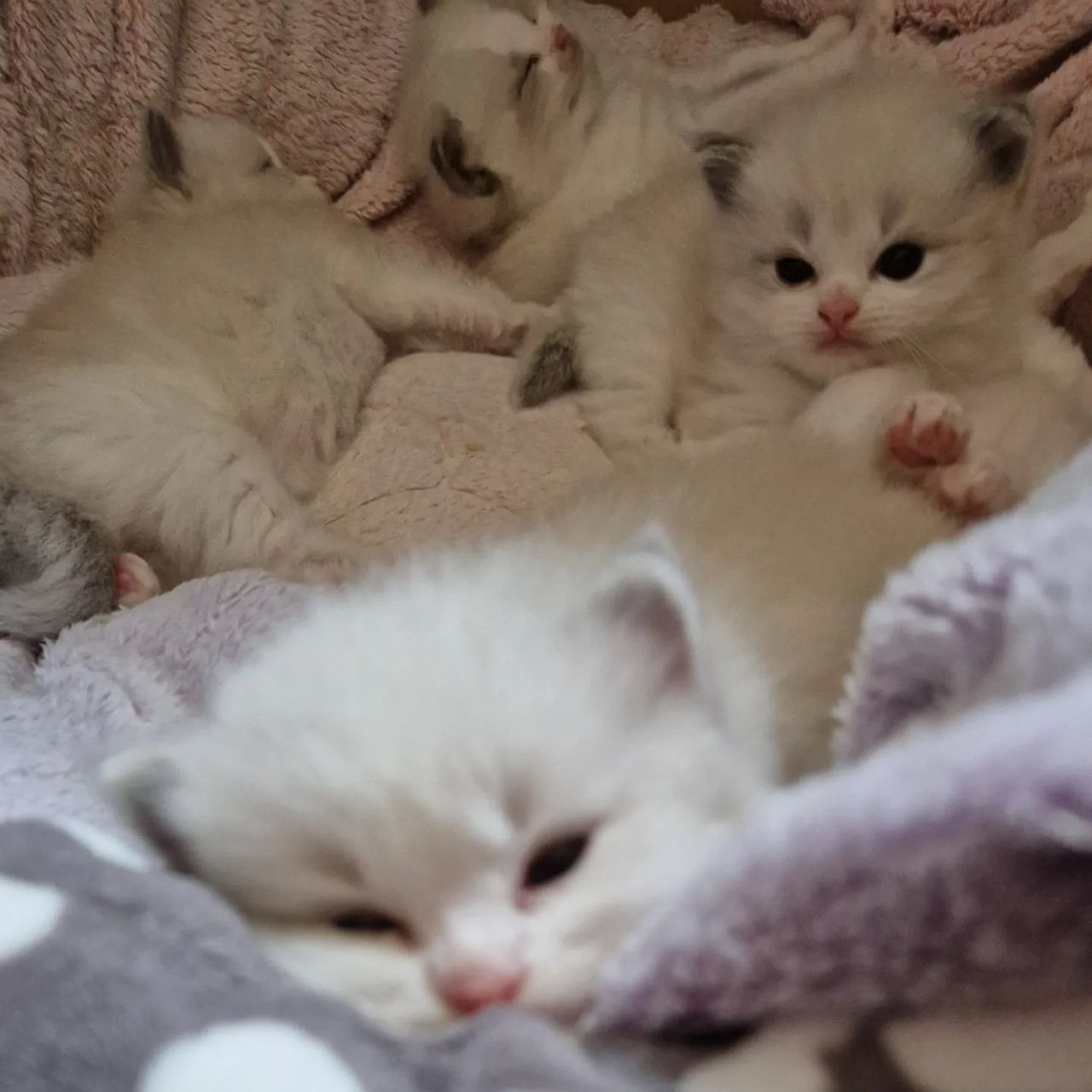
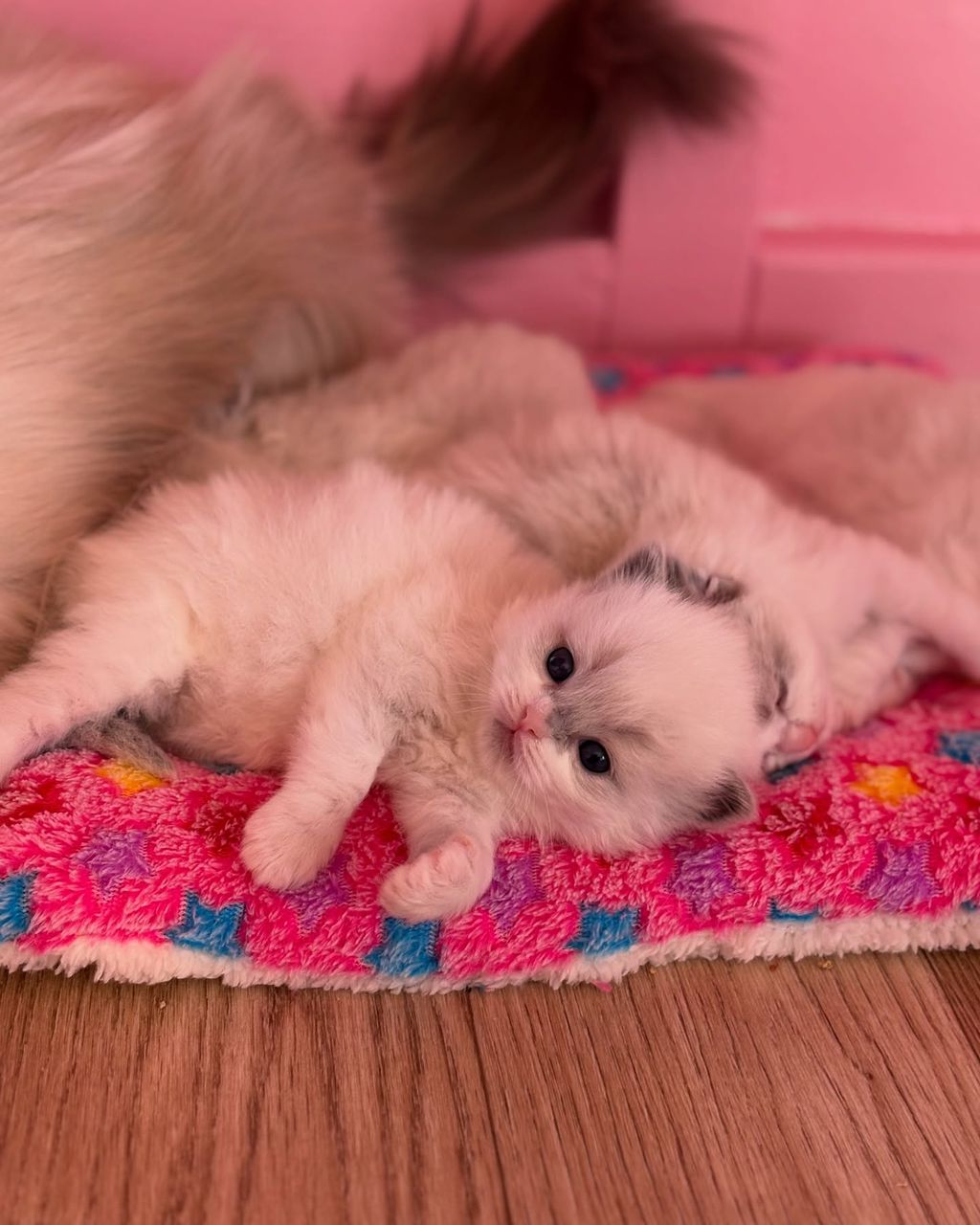
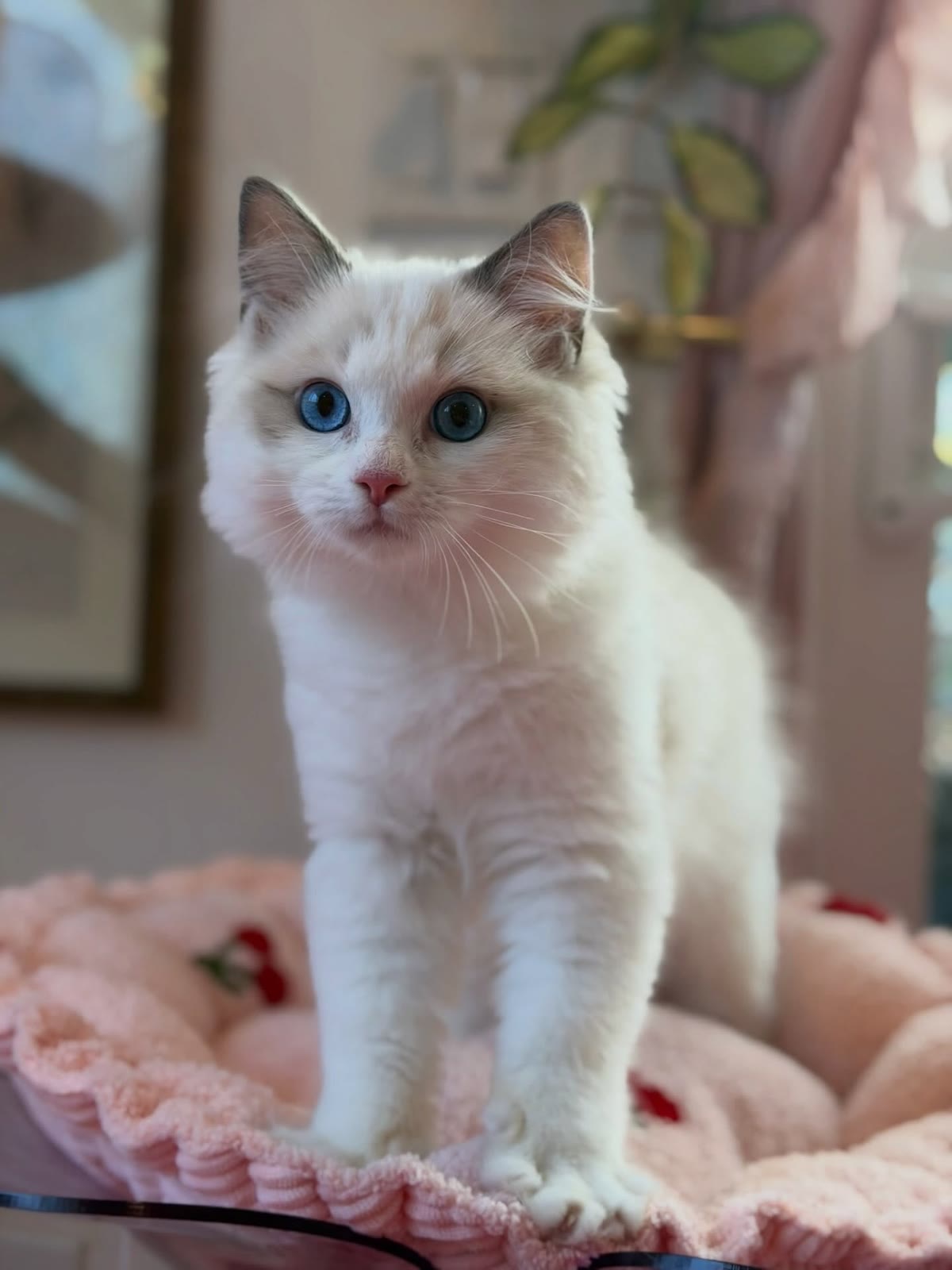
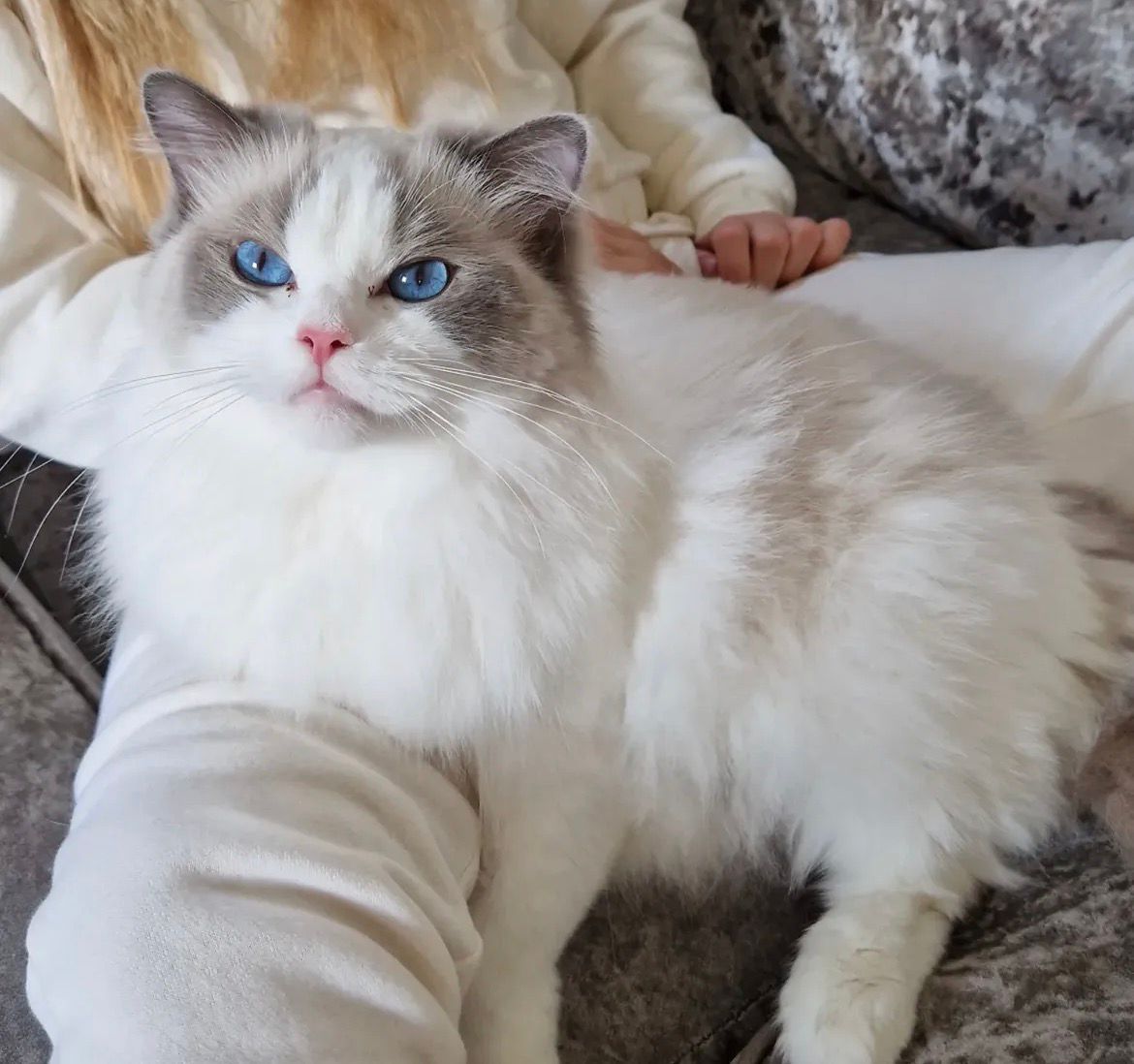
Blue comes in later and more slowly than seal. A blue kitten can look nearly white at four weeks when its seal littermate already has a mask, and the gray keeps deepening until three or four years. Ace, at eleven weeks, has the darker points of our two blues; Milo is paler and will catch up.
Blue bicolor, blue mitted, blue colorpoint
Our queen, Ace and Milo are blue bicolors: slate ears, a slate mask outside the white inverted V, a slate tail and saddle, white legs and belly. A blue mitted has a full gray mask with white mittens and boots and a white chin. A blue colorpoint has no white anywhere and is the quietest, most elegant version of the color. Colorpoint explained; mitted explained.
Gray Ragdoll, silver Ragdoll, blue Ragdoll
They are the same cat. "Gray Ragdoll" is what most buyers type, "blue" is what breeders write, and "silver" is a word that belongs to a different gene and a different breed. If you are looking for a gray Ragdoll kitten, you are looking for a blue, and there are two on this site.
Why we breed blue
Because our queen is blue and she is the best-natured cat we have owned, and because blue against white is, to our eye, the softest version of the Ragdoll look. Every kitten of hers inherits her pattern or her color or both, and, more importantly, her habit of going limp the moment she is lifted.
Blue kittens available now
2 available now, $800 each.
01
Is a blue Ragdoll actually blue?
No. Blue is the cat fancy’s word for the dilute of black, which on a cat reads as slate gray with a cool, faintly bluish cast in good light. Nobody who saw one without the name would call it anything but gray.
02
Blue or lilac?
Blue is a medium slate gray with a bluish-white body and slate nose leather. Lilac is much paler, a frosty gray with a pink undertone, a magnolia body and a lavender-pink nose. Side by side the difference is obvious; in a photograph of a kitten it often is not, and a lilac is a rare cat, so a "lilac" kitten at a low price is usually a pale blue.
03
Do blue Ragdolls have bluer eyes?
No. Eye color is separate from coat color in a pointed cat. Our blue queen has the darkest eyes of any cat we have owned, and we have seen seals with the palest.
Ask about a blue kitten
Ace and Milo are $800 each. Their mother is here.
See the kittens we have now Ask about a kitten (928) 701-7668