Colorpoint
Colorpoint Ragdoll
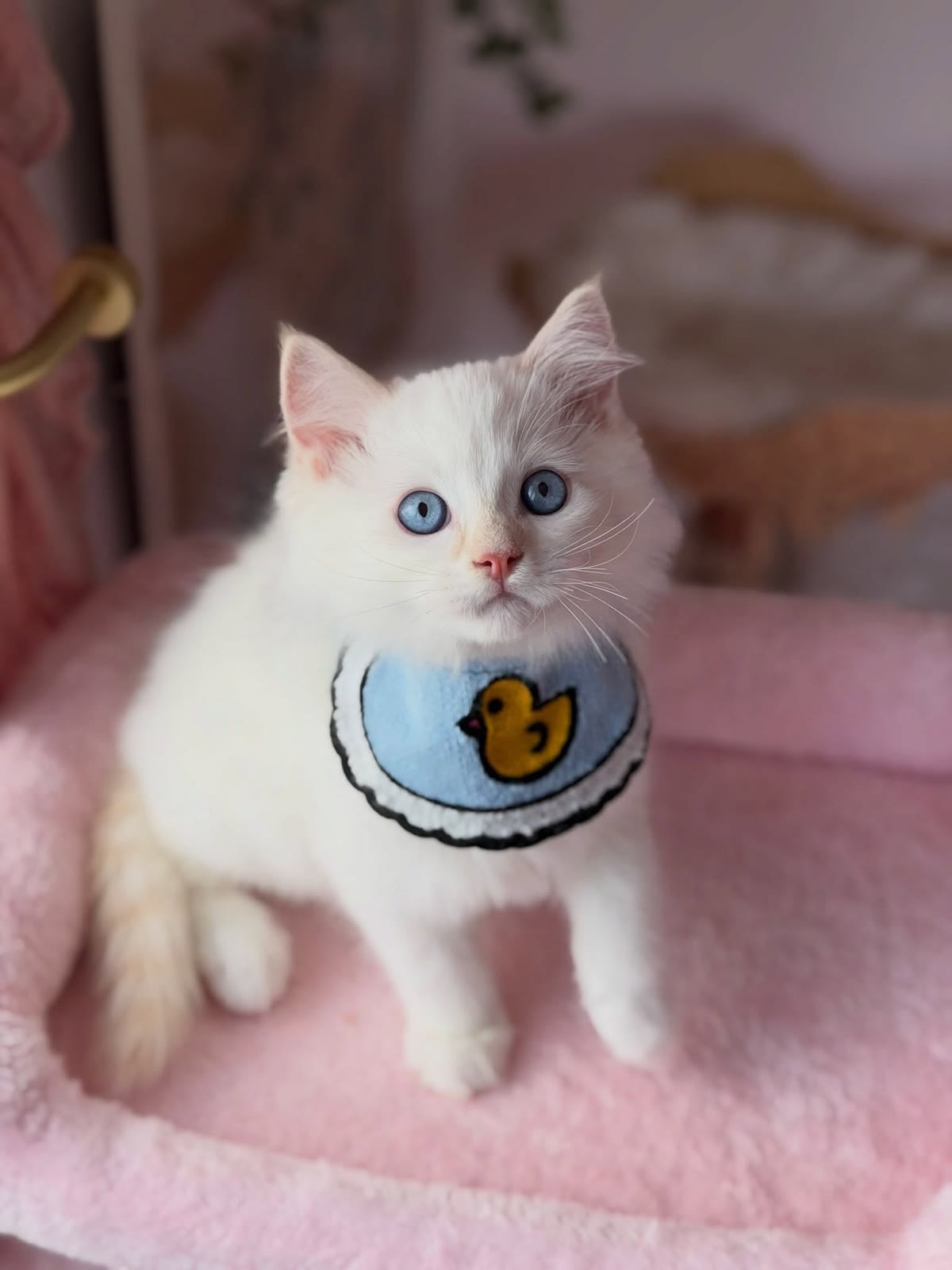
A colorpoint Ragdoll has no white anywhere: a colored face, ears, legs and tail on a pale body, with nose leather and paw pads the color of the points. It is the original Ragdoll pattern and the one that shows the color most completely. Rossi, our cream point, is a colorpoint, though at eight weeks she has almost no color yet to point with.
What colorpoint means
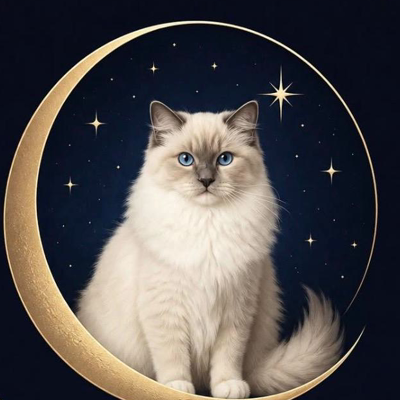
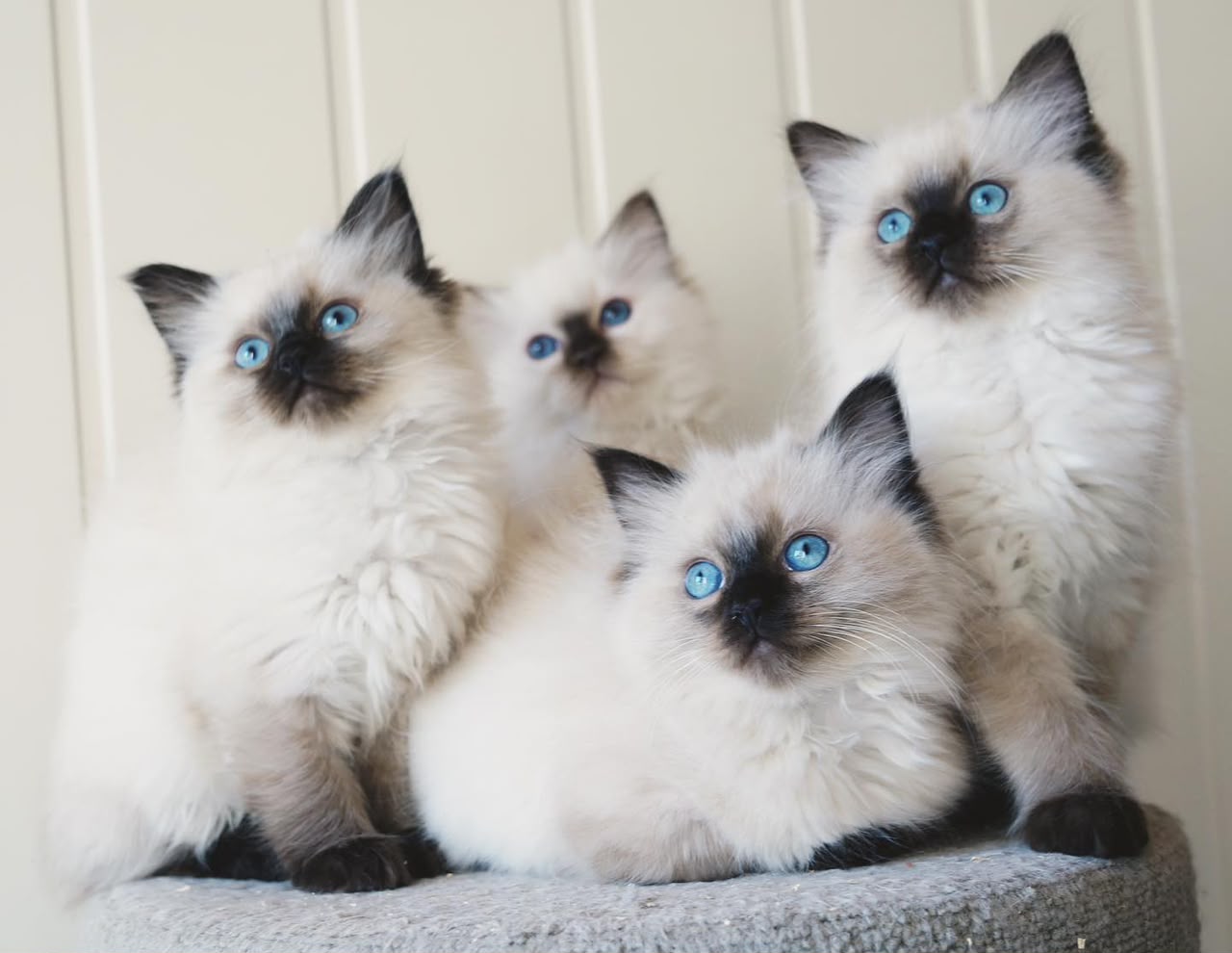
Colorpoint, written colorpoint in America (a seal colorpoint Ragdoll is what most overseas sites call the classic look) and often shortened to "point" or "pointed", is the pattern with no white spotting at all. The mask covers the whole face and joins the ears, the legs are colored to the toes, the tail is colored to the tip, and the body is a pale version of the same color that shades gently to the belly. Because there is no white to interrupt it, a colorpoint shows more of its color than any other pattern, and a seal colorpoint at three years old, dark mask and fawn body, is the cat that the breed’s founder had in mind.
Seal colorpoint
The classic. A dark brown mask that covers the face and blends into dark ears, dark brown legs, a dark tail, a fawn body, and a dark brown nose. High contrast, blue eyes, the Ragdoll of the paintings. It is the single most searched-for Ragdoll in the United States. Seal, in full.
Blue colorpoint
The same cat in slate gray: a gray mask and ears, gray legs and tail, a bluish-white body and a slate nose. Softer and quieter to look at than the seal. Blue, in full.
Cream colorpoint
Rossi. A cream point is the palest pointed cat there is, a white body with apricot on the ears, the mask, the legs and the tail that arrives slowly and never gets very dark. At eight weeks it is a white kitten with a faint warm tail; at a year it is unmistakably cream. Flame and cream, in full.
Colorpoint or mitted?
Turn the cat over. A colorpoint has colored toes and a colored chin. A mitted has white front paws, white back boots and a white chin, and often a white stripe down the belly. From the front, if the chin is white, it is not a colorpoint. If the nose is pink, it is a bicolor.
How we breed for it
Pattern in Ragdolls follows simple genetics. Bicolor to bicolor gives bicolors and sometimes colorpoints, depending on what each parent carries; colorpoint to colorpoint gives only colorpoints. Our current pairing is bicolor to bicolor and it gives us mostly bicolors with a colorpoint in some litters, which is how Rossi arrived. We do not choose the pattern of a litter before it is born and we do not take money for one that has not.
Living with a colorpoint
No different from any other Ragdoll. One small thing: because the legs are colored, a colorpoint shows dust and litter on its feet less than a white-legged bicolor does, and its coat shows the shading changes of the seasons more, darker in winter and lighter in summer.
Colorpoint kittens available now
One available now, $800 each.
01
Is a colorpoint Ragdoll the same as a Siamese?
Same gene, different cat. A colorpoint Ragdoll is two or three times the weight, semi-longhaired, round rather than wedge-faced, quiet where a Siamese is loud, and floppy where a Siamese is wiry.
02
Do colorpoints go darker than bicolors?
The points darken at the same rate. A colorpoint looks darker overall because there is no white to break the color up and because the body shades more visibly against a full mask.
03
What color are a colorpoint’s nose and paw pads?
The color of the points: dark brown on a seal, slate on a blue, cinnamon pink on a chocolate, lavender pink on a lilac, and pink on a flame or cream.
Ask about a colorpoint
Rossi is $800. All the kittens.
See the kittens we have now Ask about a kitten (928) 701-7668