
A Ragdoll Kitten, Week by Week
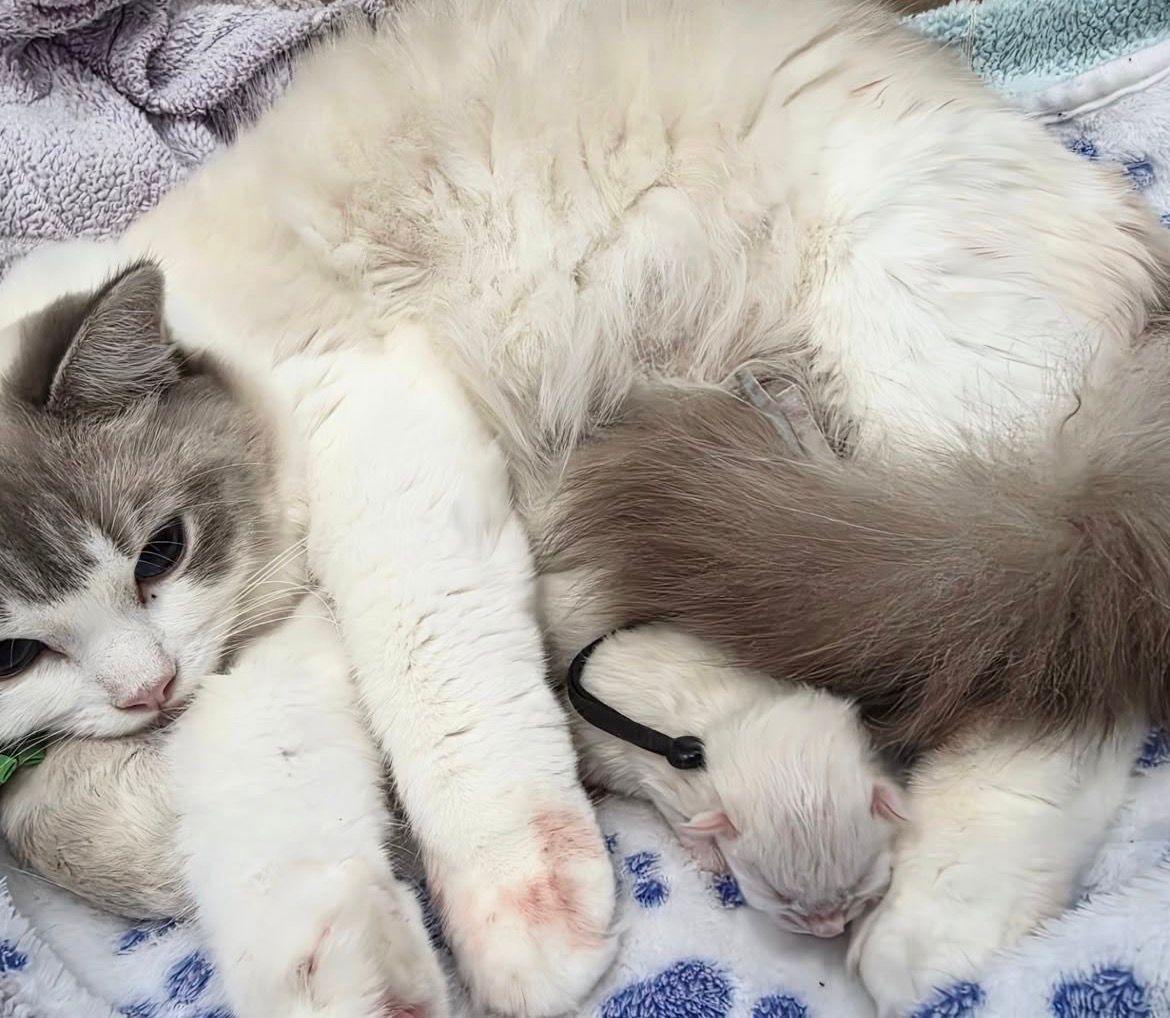
A Ragdoll kitten is born white, blind and deaf, weighing about about three and a half ounces. Twelve weeks later it is about three and a half pounds, colored, litter trained and ready to leave. Nothing about that happens by accident.
This is what happens in between, week by week, photographed in our own house. It is also why we do not let a kitten go before 12 weeks, whatever the law allows.
Week one
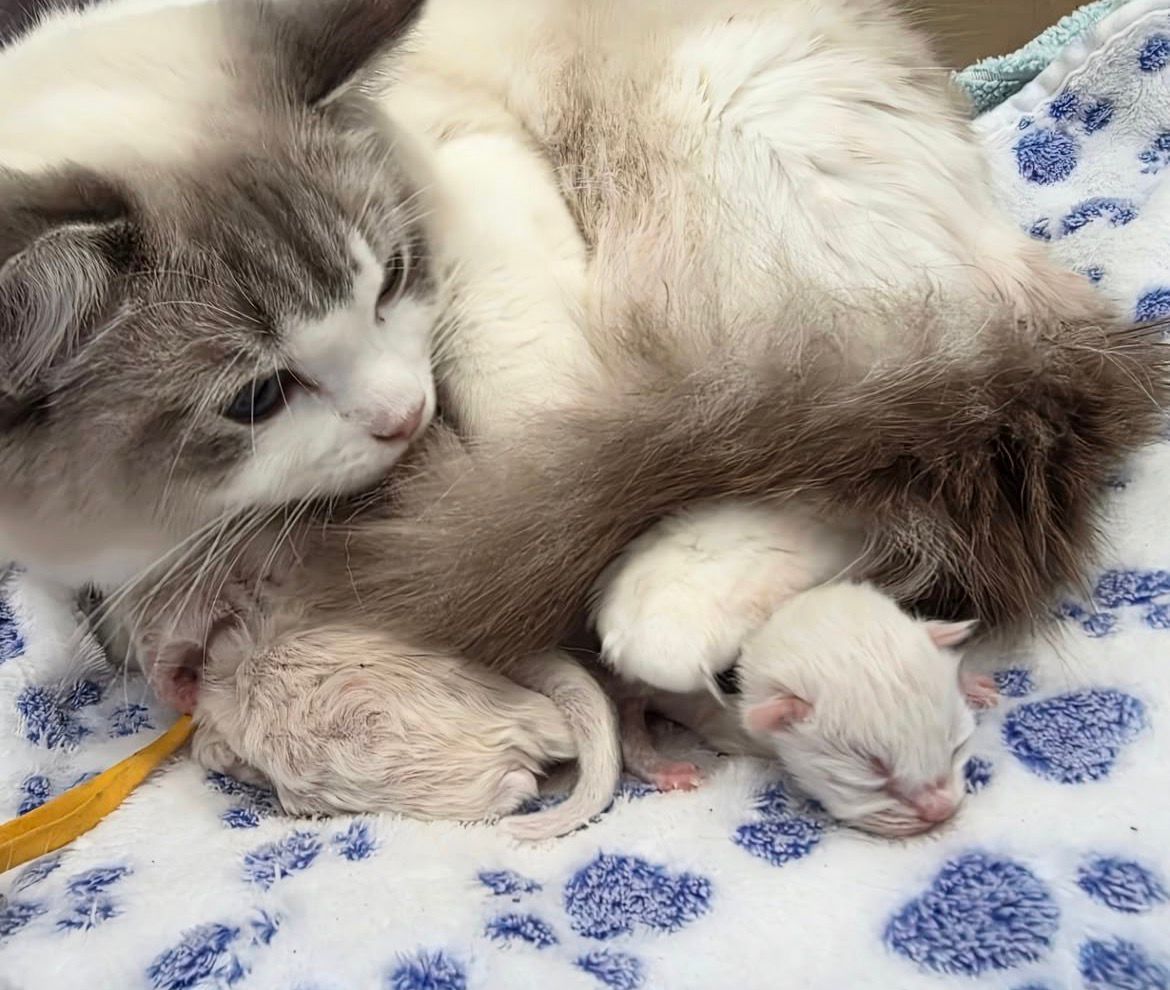
Eyes closed, ears folded flat, white from nose to tail. A newborn does two things, feed and sleep, and doubles its weight by the end of the week. The mother does everything else, including keeping them warm. A kitten cannot hold its own temperature until about three weeks, which is why the nursery has a heat mat and why she rarely leaves them. The first hint of color, a gray or brown shadow on the ear tips and the tail, appears around day five on a seal and later on a blue. Why every Ragdoll is born white.
Week two
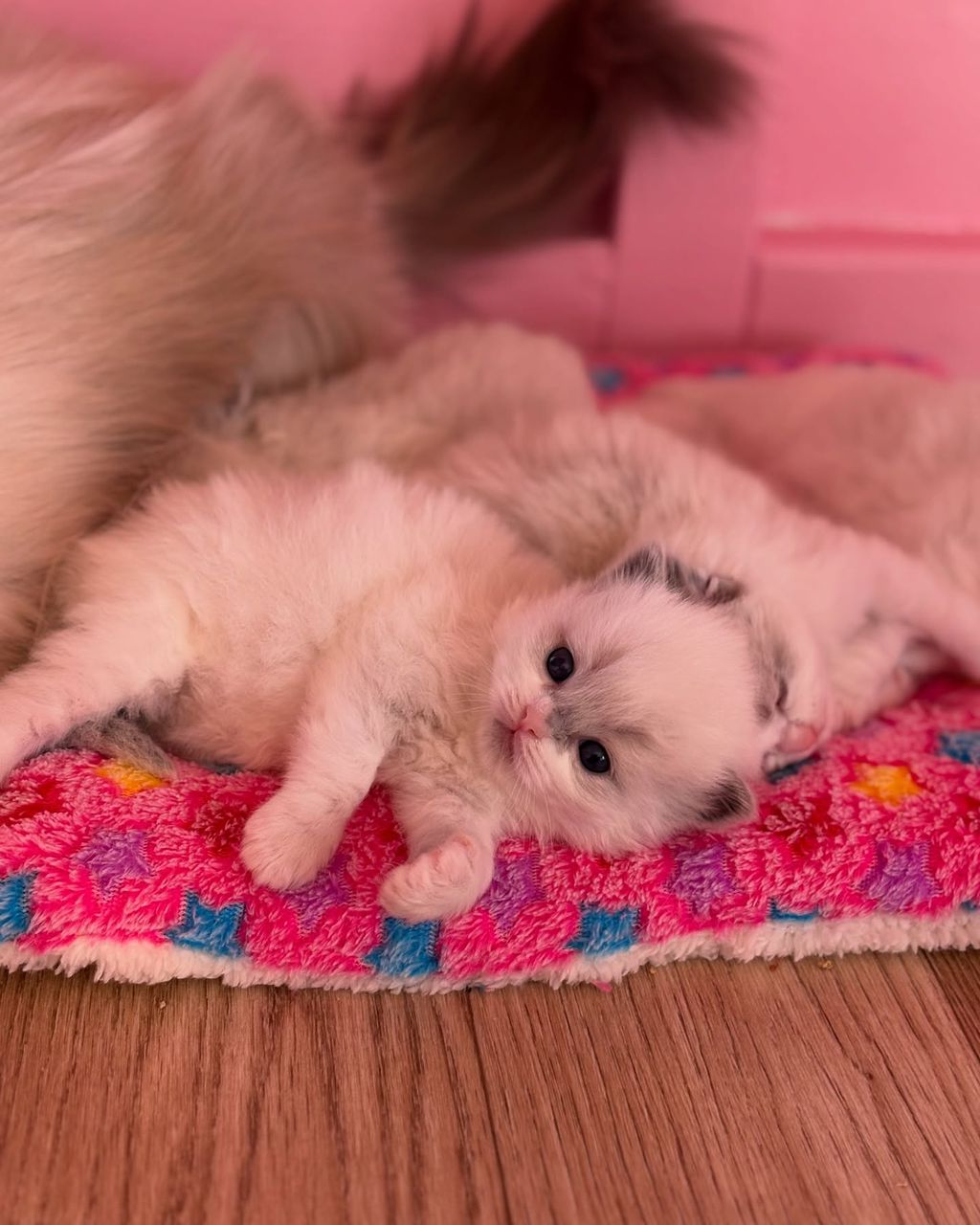
The eyes open between day seven and day twelve, a cloudy blue that clears over the following week. The ears unfold. The kittens find their feet and paddle rather than walk. The points on a seal are now unmistakable, and a bicolor's white V shows against the darkening mask.
Week three
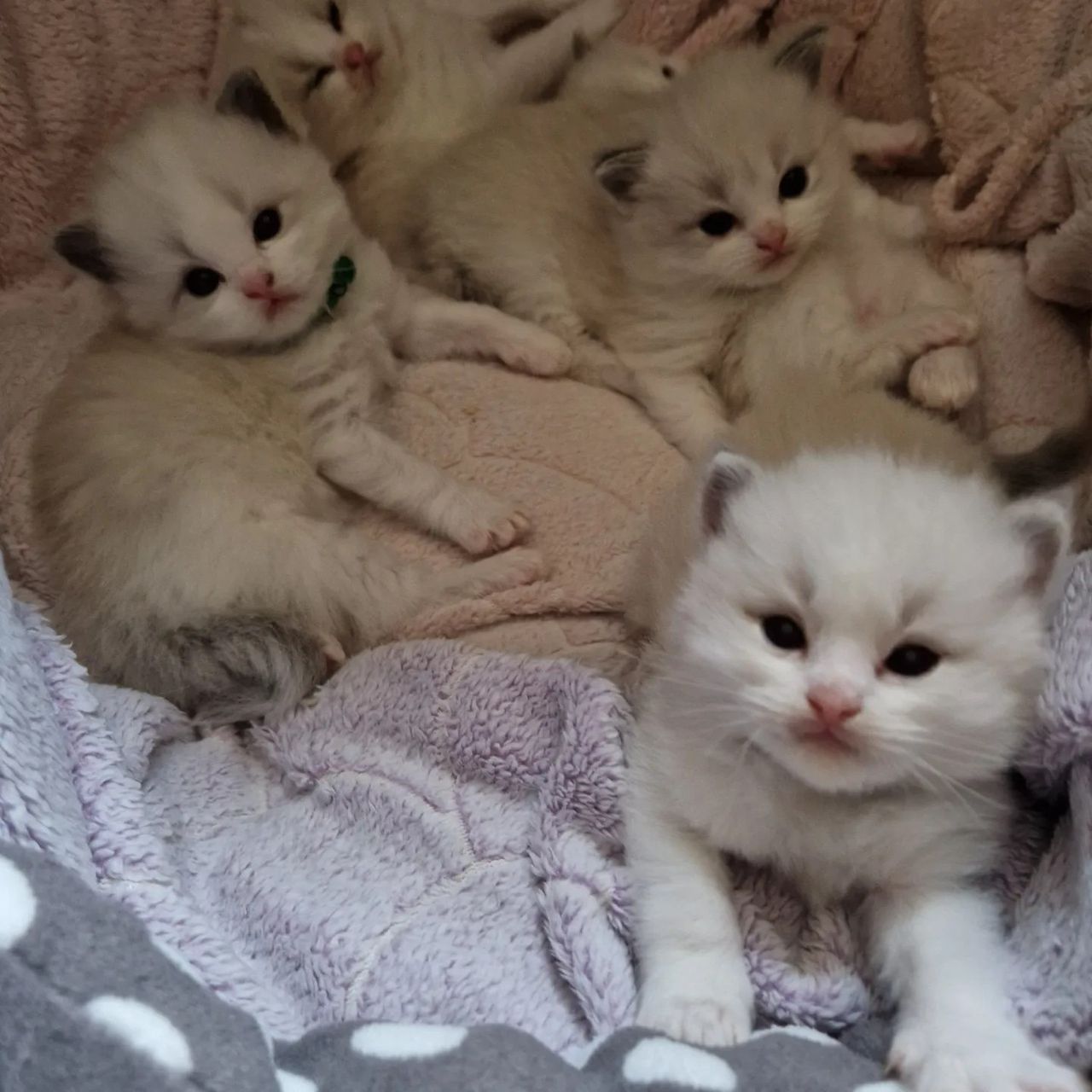
They walk, badly. They hear, startle at the first loud noise of their lives, and then stop startling. The first teeth come through. They begin to climb out of the bed, which is when the pen moves from the nursery to the living room and the handling begins in earnest: every kitten picked up several times a day by every member of the family, turned over, held, put down.
Week four

Weaning starts: a saucer of wet kitten food softened with kitten milk, walked through before it is eaten. A litter tray with low sides goes in the pen, and most kittens use it within days because their mother does. They play, clumsily, with each other and with anything that moves. Blues now show their color clearly. Creams are still white.
Weeks five and six
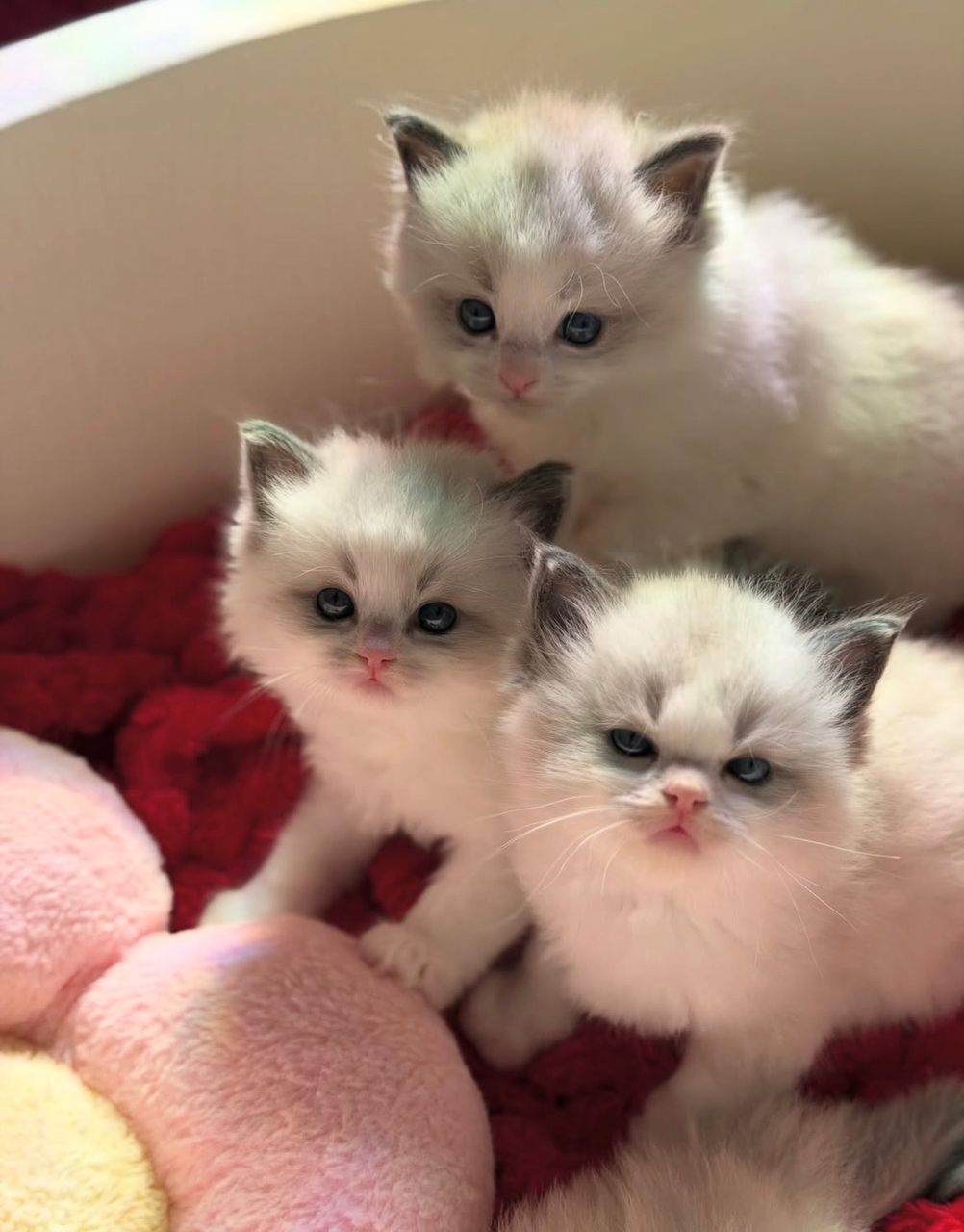
The run of the living room. Proper play: pouncing, stalking, wrestling, the first attempts at the cat tree. Eating solid food and drinking water, still feeding from the mother when she allows it, which is less and less. The first vaccination at six to eight weeks and the first vet check. They now sleep alone in the pen at night and settle within minutes.
Weeks seven and eight
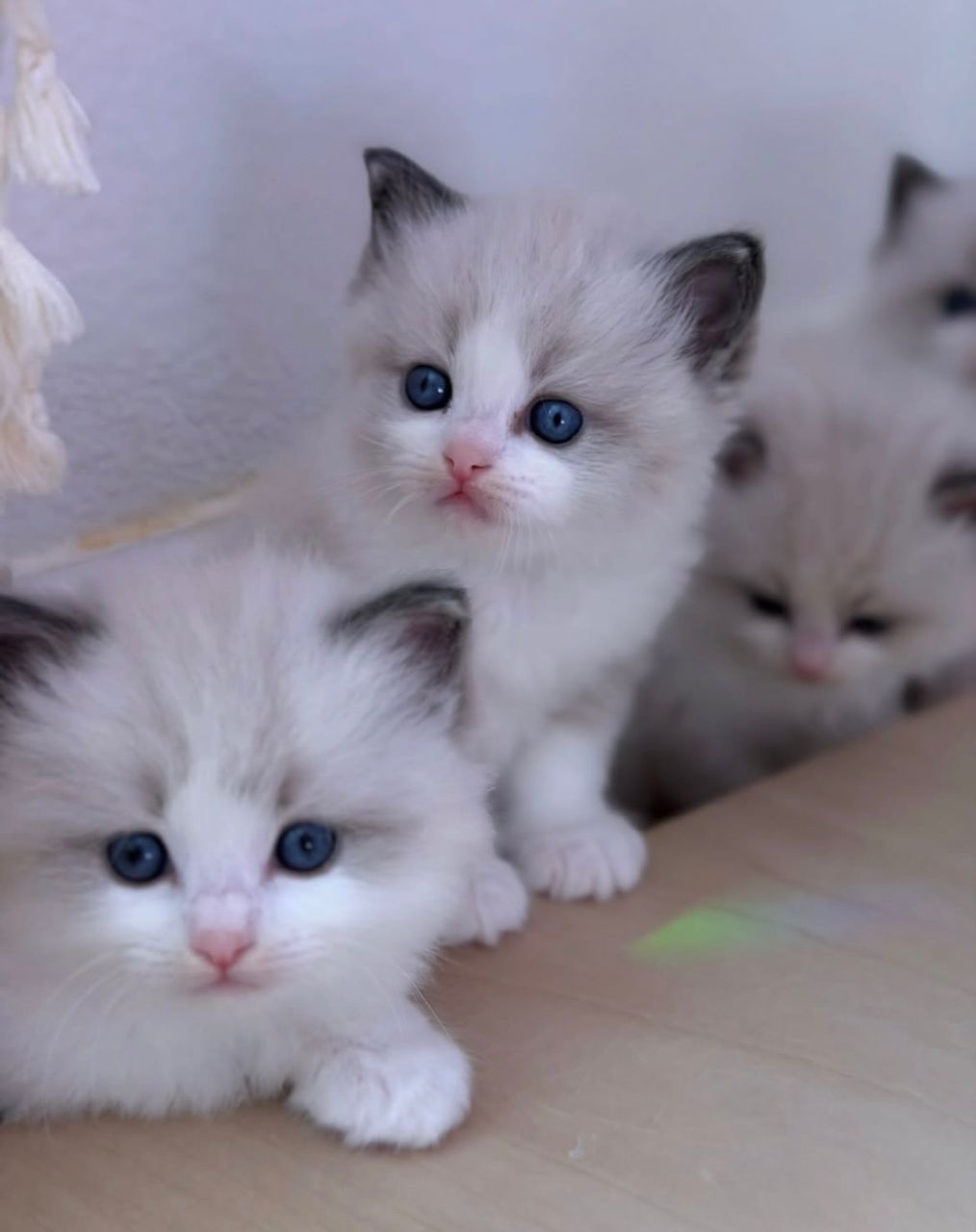
Fully weaned. Litter trained. Personalities plain: the steady one, the first to the door, the watcher, the one with the purr. Color on seals and blues obvious to anyone; a cream like Rossi still nearly white with a warm tail.
The part that catches people out
Eight weeks is the age at which some people sell kittens, and the age at which we would not. The next four weeks are when a kitten learns the most: how hard to bite in play, from its mother and its littermates; that the vacuum cleaner, the dog and visitors' shoes are not the end of the world; that a car goes to the vet and comes back. A kitten taken at eight weeks skips those lessons and some of them cannot be taught later. Ask any breeder who sells at eight weeks why, and listen to the answer.
Weeks nine to twelve
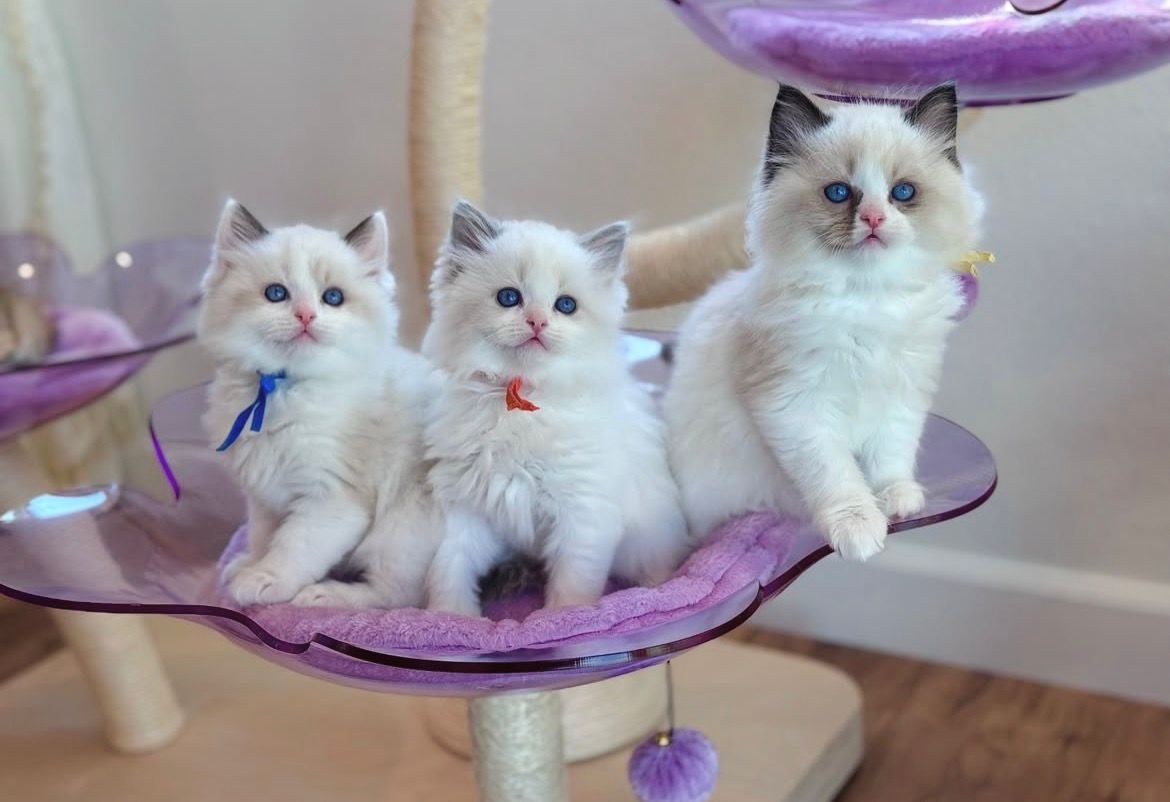
Confidence. The second vaccination at ten to twelve weeks. Microchipping. The vet check before they leave. And at twelve weeks, a kitten that weighs about three and a half pounds, uses a tray, eats what you will feed it, comes when it hears a voice, and arrives at your house as if it had always lived there.

After twelve weeks
The third vaccination at fourteen to sixteen weeks, with your vet. The baby coat drops at four months. Spaying or neutering by six months, with your vet. And then three years of growing, which is another story.
How we handle it
Every kitten on the kittens available now has been through the twelve weeks above in this house. What goes home with it, and what the first week at yours looks like, is on the kitten page. If you want to know what a particular kitten is like at this exact moment, ask about a kitten and we will tell you.
Keep reading

How Long Do Ragdoll Cats Live?
Twelve to seventeen years, some reach twenty. Most of the difference is decided by the owner, not the breed.
Are Ragdoll Cats Hypoallergenic?
No. Nothing is. But plenty of people with a mild allergy live happily with one, and there is a way to find out before you buy.
How Big Do Ragdoll Cats Get?
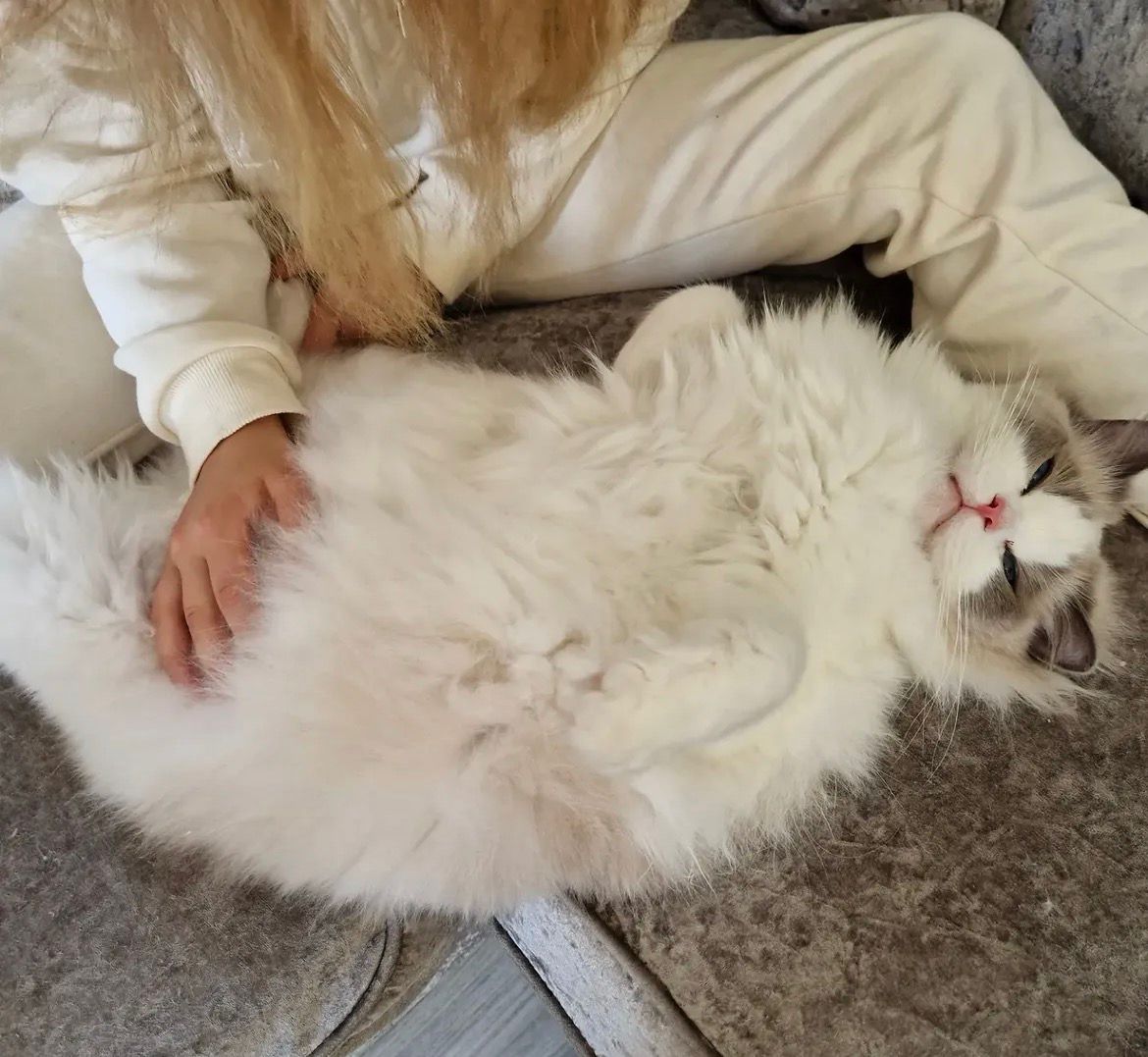
Males thirteen to twenty pounds, females four to six, and it takes three to four years. A weight table by age from our own cats.