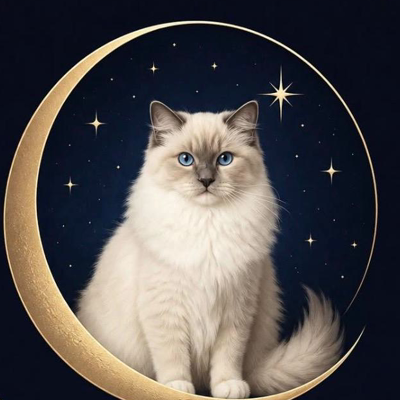
Flame & Cream
Flame Point and Cream Point Ragdolls
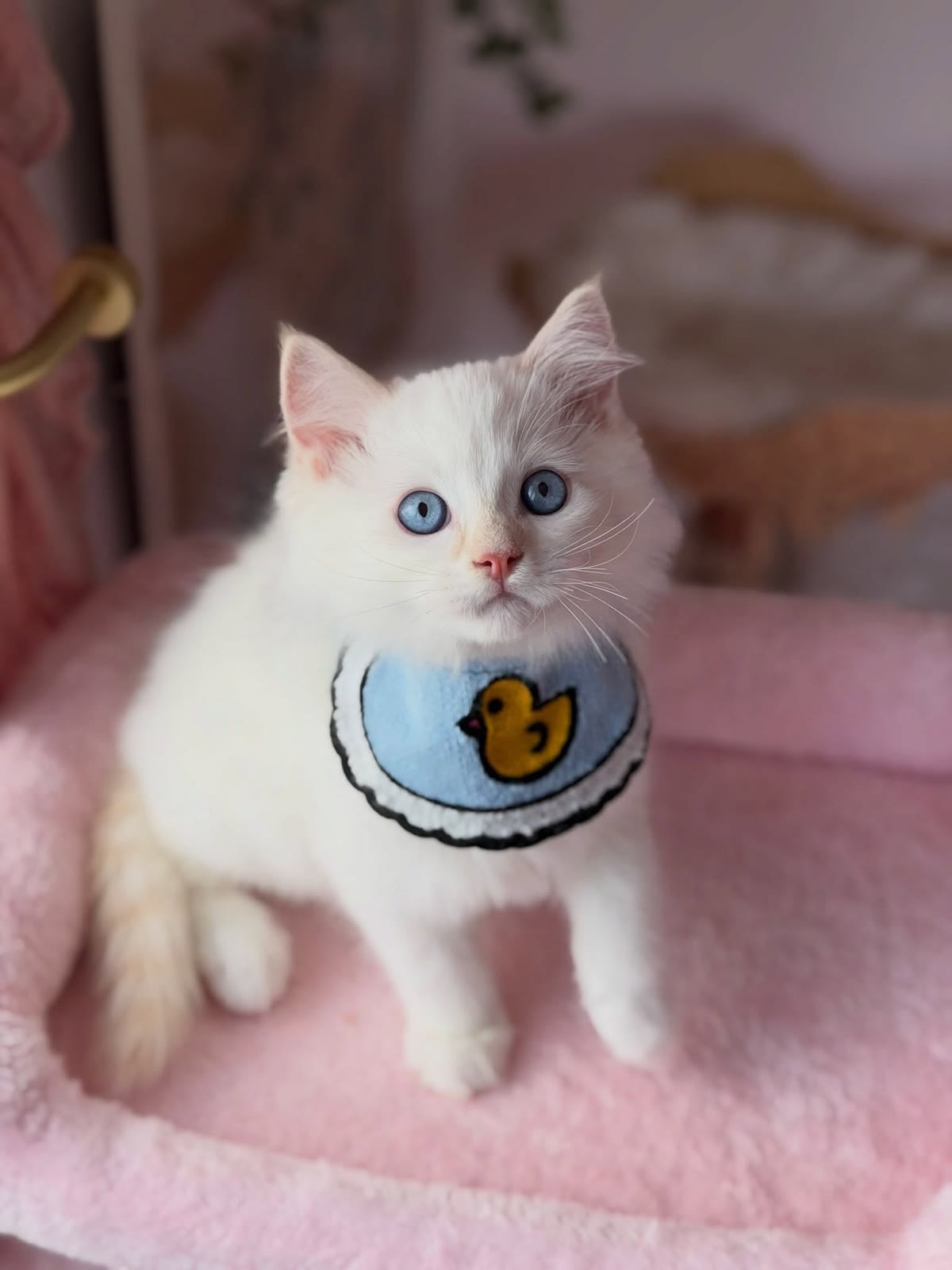
Flame point is the red Ragdoll, orange points on a white body, and cream point is its dilute, the palest Ragdoll of all. Rossi, our youngest kitten, is a cream point. This page explains both, why they are nearly always one sex, how slowly the color arrives, and how to tell a cream kitten from a white one.
What flame means
Flame is the cat fancy’s name for red on a pointed cat. The points are orange, from a deep apricot to a bright ginger, on a body that stays white with, at most, a faint warm shading on the back in old age. The nose leather and paw pads are pink. Flame is the only Ragdoll color that does not darken the body, so a flame point stays a white cat with orange ears all its life. People call it red, orange or ginger, and all three are the same cat.
What cream means
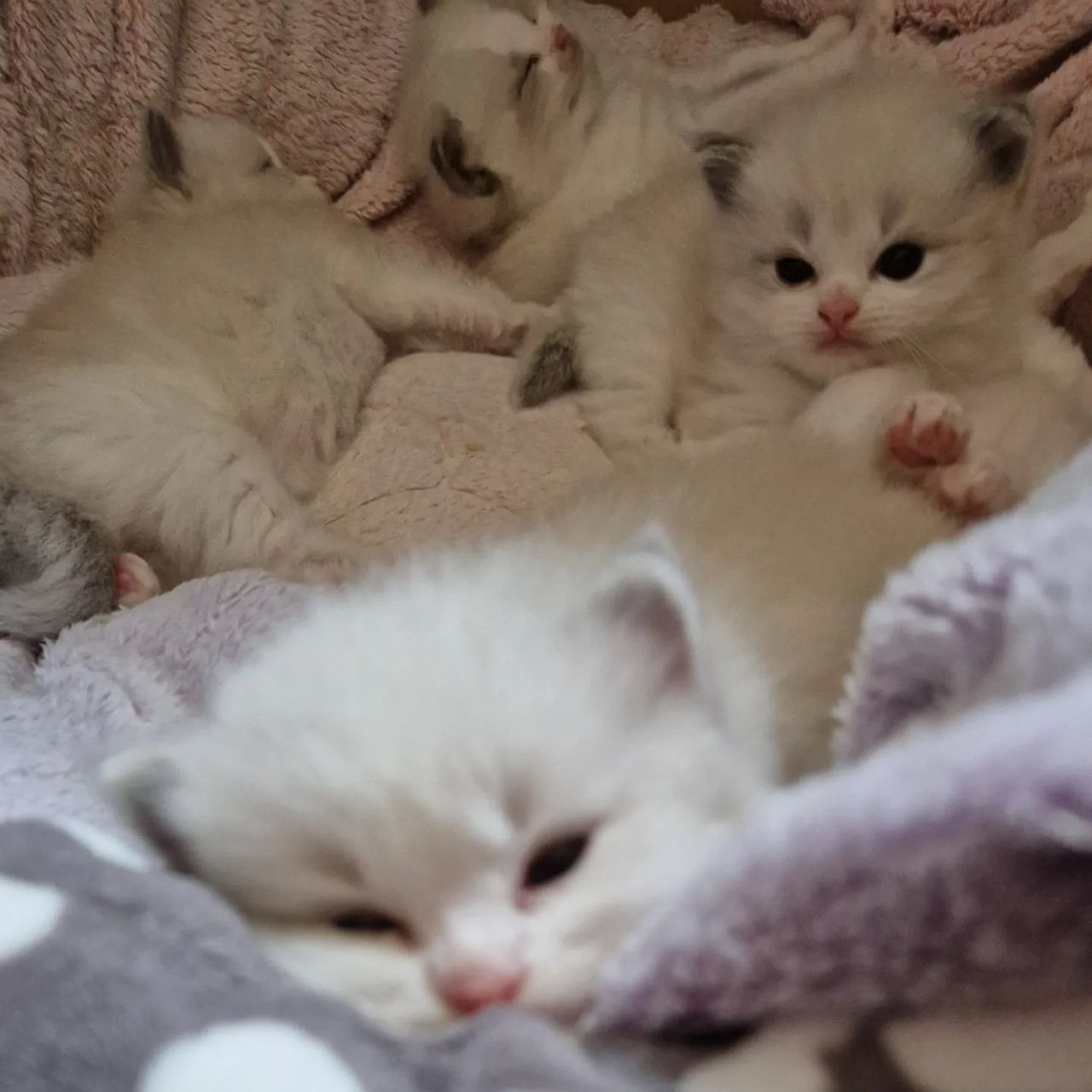
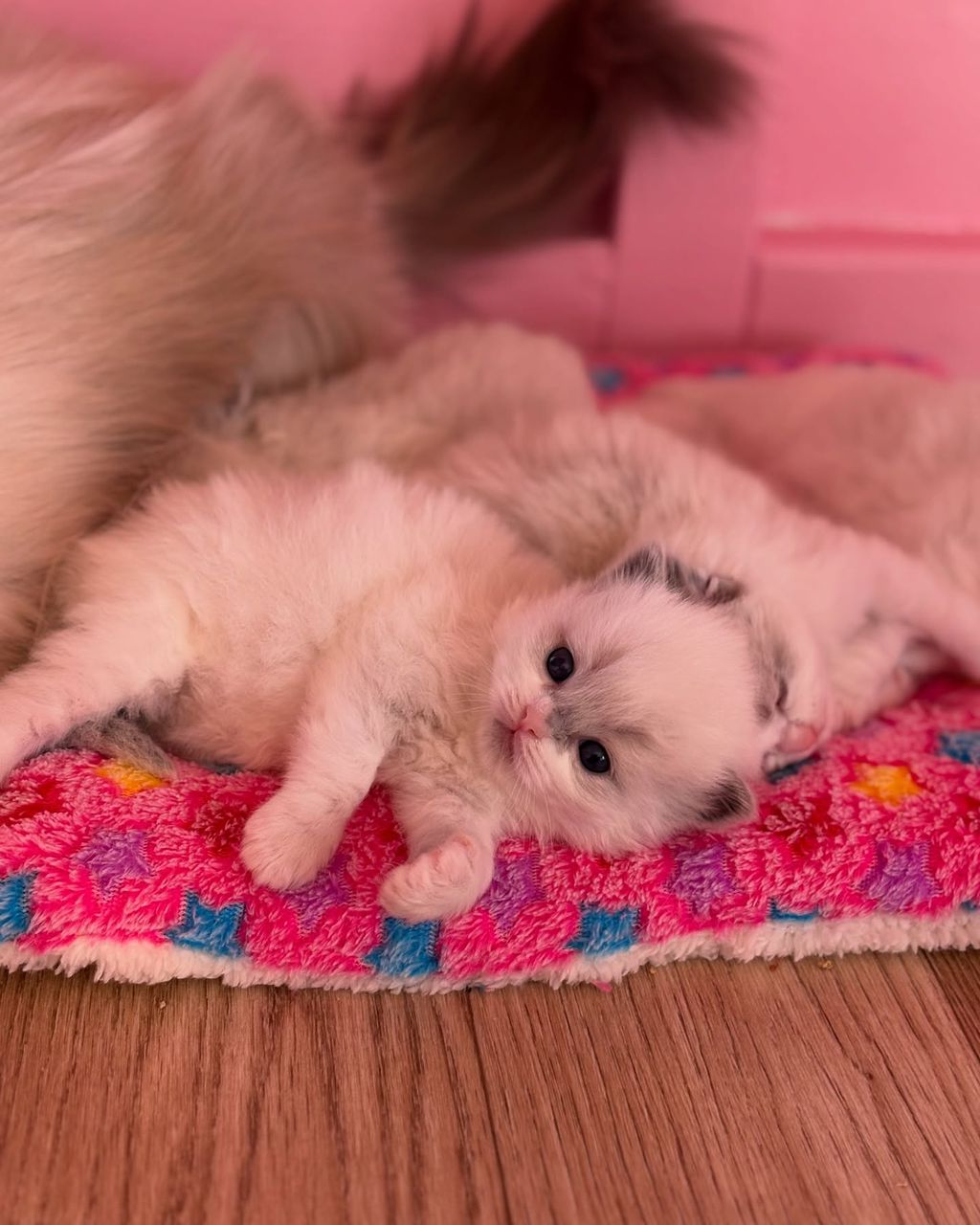
Cream is flame with the pigment thinned by the dilution gene, the way blue is thinned seal. The points are a pale apricot, sometimes nearly buff, and they arrive later and more slowly than any other color. A cream kitten at eight weeks looks white. At six months it looks white with warm ears. At a year the tail and the mask have a clear pale orange and the cat is recognisably cream, and it stays about there. The body is white throughout. Cream is the most understated Ragdoll color and it suits the breed’s softness.
How the color comes in: Rossi
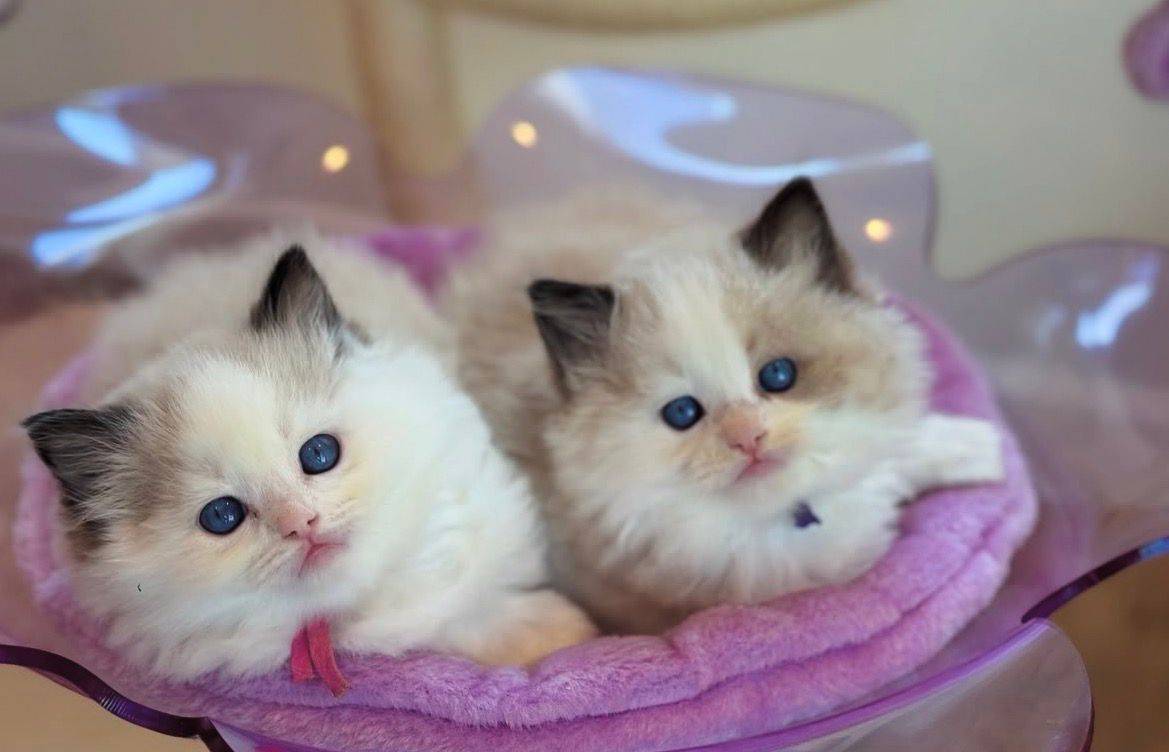
Why they are almost always male
Red is carried on the X chromosome. A male cat has one X and one copy of red is enough to color him. A female has two X chromosomes and needs red on both to be a flame or a cream; with red on only one she becomes a tortie, red patches on seal or blue. So flame and cream males are common and females are rare enough that a cream female like Rossi is a small piece of luck.
Flame bicolor, flame mitted, flame colorpoint
Every pattern exists in flame and cream. A flame bicolor is a white cat with orange ears and tail and a white V that is hard to see against a white face. A cream colorpoint, which is what Rossi is, is a white cat with pale apricot on all four legs, the tail, the ears and eventually the mask, and pink nose and pads.
Cream or white?
A young cream point is, to most eyes, a white kitten with blue eyes. The tells are the tail, which colors first and shows a warm cast in daylight by eight weeks, and the ears, which follow. There is no true white pointed Ragdoll; a "white Ragdoll" is a cream, a lilac, or a kitten whose color has not arrived. Why every Ragdoll kitten is born white.
Living with a flame or cream
The same cat as every other Ragdoll in temperament. In practice the palest colors show every mark, so a cream Ragdoll on a dark sofa is a cream Ragdoll that gets brushed more often, and a white-bodied cat shows tear staining under the eyes more than a fawn-bodied one does. A damp cloth once a day is all that needs.
Cream kittens available now
One available now, $800 each.
01
Why are flame points nearly always male?
The red gene sits on the X chromosome. A male has one X, so one copy of red makes him red. A female has two, and needs red on both to be red; one copy makes her a tortie instead. So red and cream males are common, red and cream females rare, and torties almost always female.
02
Will Rossi get much darker?
A little. Cream points reach a pale apricot on the ears, mask, legs and tail by about a year and then stay there. She will never be as dark as a flame and nothing like as dark as a seal. Her body will stay white.
03
Is a flame point Ragdoll the same as an orange cat?
The same red gene, but on a pointed cat, so the orange appears only on the extremities and the body stays white. An orange tabby is red all over. A flame point Ragdoll is a white cat with orange ears, mask, legs and tail.
Ask about Rossi
Rossi is $800 and can go home from twelve weeks. All the kittens.
See the kittens we have now Ask about a kitten (928) 701-7668