Bicolor
Bicolor Ragdoll
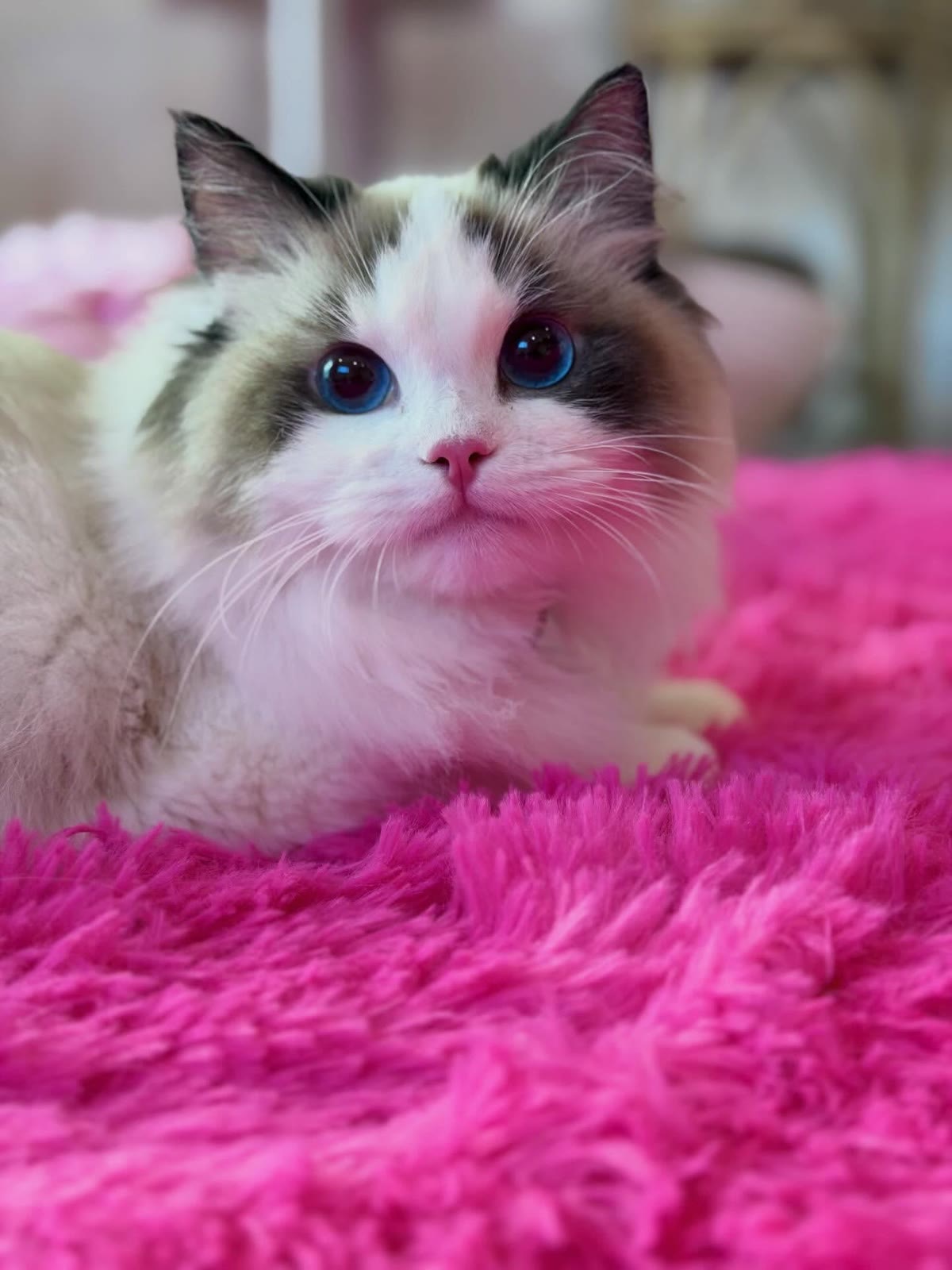
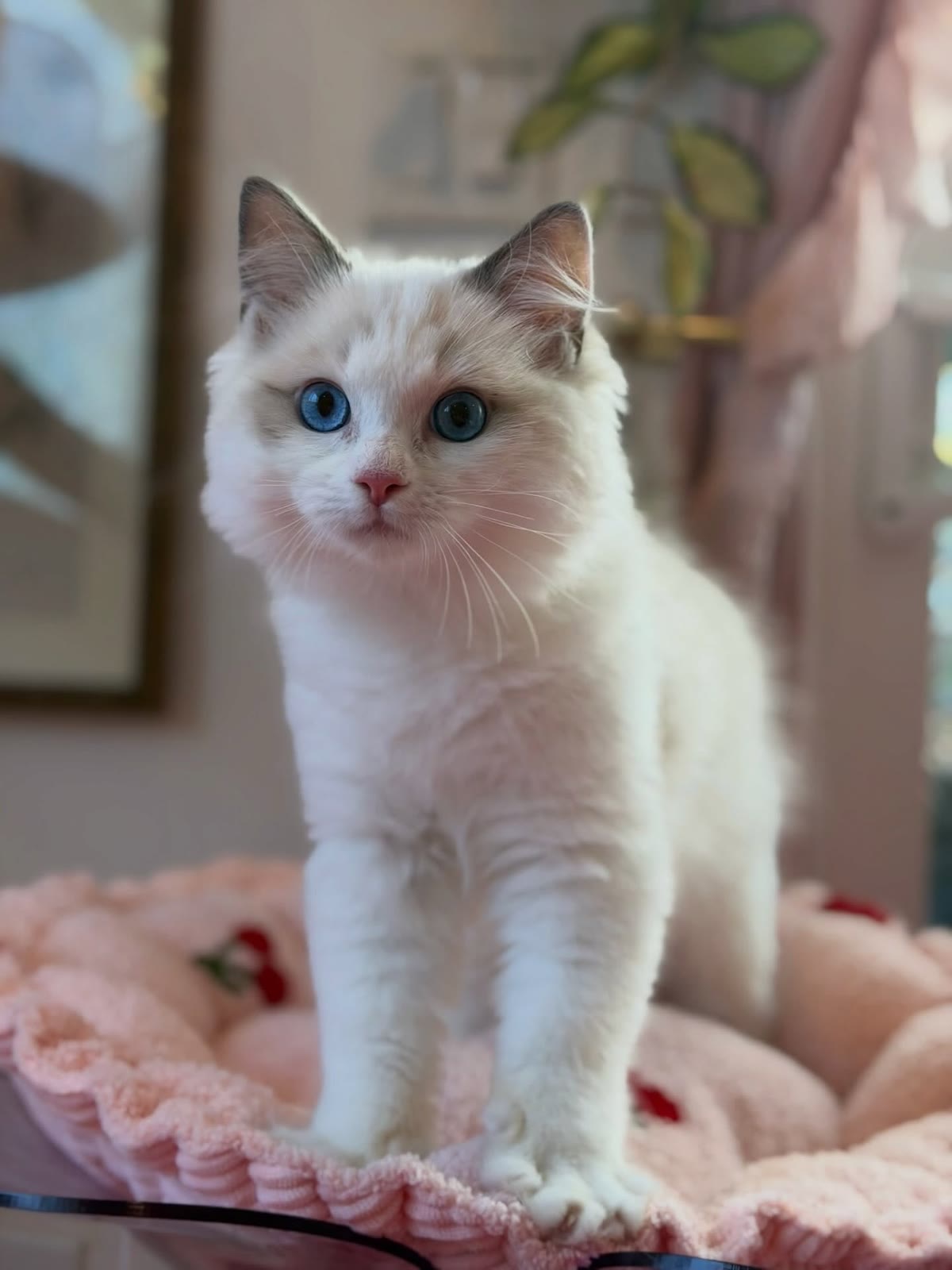
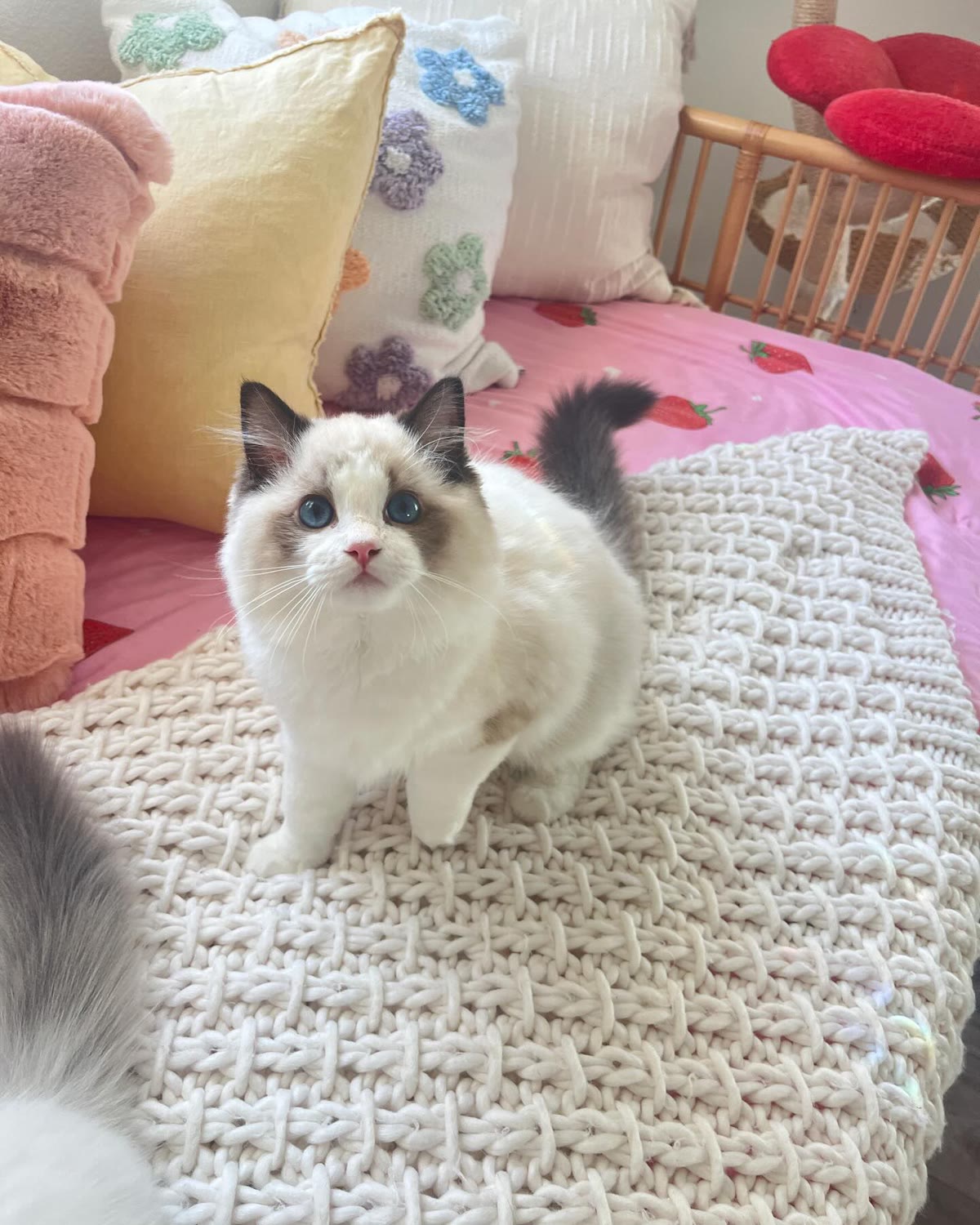
The bicolor Ragdoll wears a white inverted V on its face, white legs and a white chest and belly, with color on the ears, the mask outside the V, the tail and a saddle on the back. It is the pattern most people ask us for, four of our five kittens carry it, and our queen is the cat we would show anyone who wanted to know what a good one looks like.
The parts of a bicolor
- The V. An inverted white triangle that starts between the eyes and widens down to the muzzle and chin, so the nose sits in white and is pink. On a good bicolor the V is symmetrical and does not reach above the outer corners of the eyes.
- The mask. The color that remains on the face: the ears, the forehead outside the V and the cheeks.
- The legs. White to the top, front and back. Color on a leg is a fault in the show ring and completely harmless in a pet.
- The saddle. Color on the back, from the shoulders to the tail, that comes in slowly and is often patchy for the first year.
- The belly. White, front to back.
- The tail. Fully colored.
Bicolor, mitted, or high mitted?
A mitted has a colored face and colored legs with white mittens on the front paws and white boots behind. A bicolor has white legs all the way up and the white V on the face. A high mitted is a mitted with so much white that it passes for a bicolor, and the honest answer is that unless you are breeding you will never know or care. What you will notice is the face: colored nose, mitted; pink nose in a white V, bicolor.
How the pattern arrives
The white is there from birth, which is the one thing you can see on a newborn Ragdoll: the V and the white legs are visible as a pattern in the fur before any color has arrived to contrast with them. The color on the ears comes at a week or so, the mask fills in over two months, and the saddle takes the longest, sometimes not settling until the second year.
Bicolor in every color
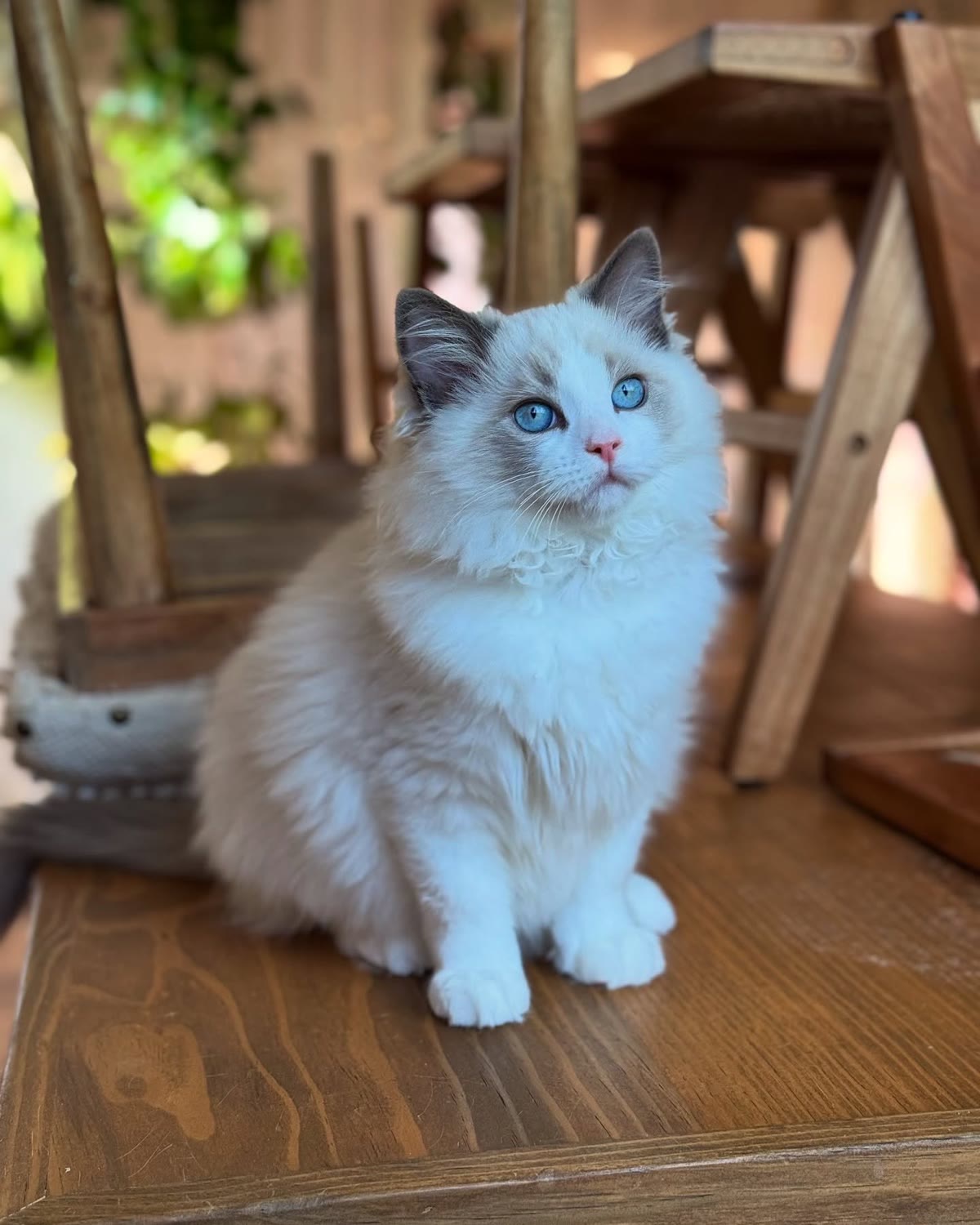
Our bicolors are seal (Pearl and Bambi) and blue (our queen, Ace and Milo). The same pattern exists in chocolate, lilac, flame and cream, and with lynx or tortie over it. A cream bicolor, for what it is worth, is a nearly white cat with a white V, which is a pattern you have to take on trust.
Why bicolor is so popular
Because of the face. The white V opens the expression up and makes the blue eyes look larger and the cat look, to human eyes, younger and kinder. It is the pattern in most of the breed’s photographs and it is the one most people mean when they say "a Ragdoll".
Bicolor kittens available now
4 available now, $800 each.
01
What is a high mitted Ragdoll?
A cat with two copies of the mitted gene, which pushes the white so far up the legs and face that it looks like a bicolor. Genetically it is not one, and bred to another it will not throw true bicolors. To a pet buyer the difference is invisible and irrelevant; to a breeder it matters.
02
Is bicolor rarer?
No. It is the most asked-for pattern and one of the most common. What is rare is a bicolor with a clean, symmetrical V and no color on the legs, which is what the show ring wants and what pet buyers rarely notice.
03
Do bicolors have pink noses?
Yes. The nose sits inside the white V, so it is pink on every bicolor whatever the color of the points. A colored nose on a Ragdoll means colorpoint or mitted.
Ask about a bicolor
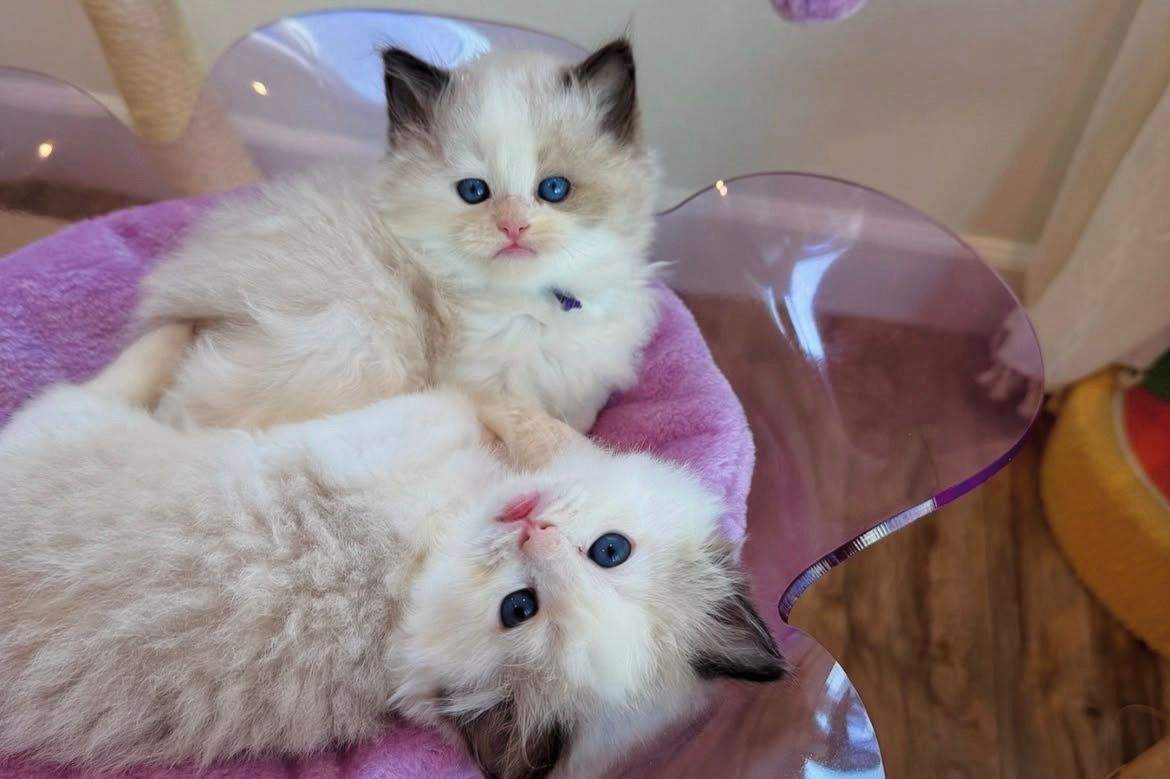
Four bicolors available, two seal and two blue, $800 each.
See the kittens we have now Ask about a kitten (928) 701-7668