

Your Kitten
What Comes With Your Kitten
Everything that goes home with a Celestial kitten, then the first week of Ragdoll kitten care at your house, so you know what to expect before it is happening.
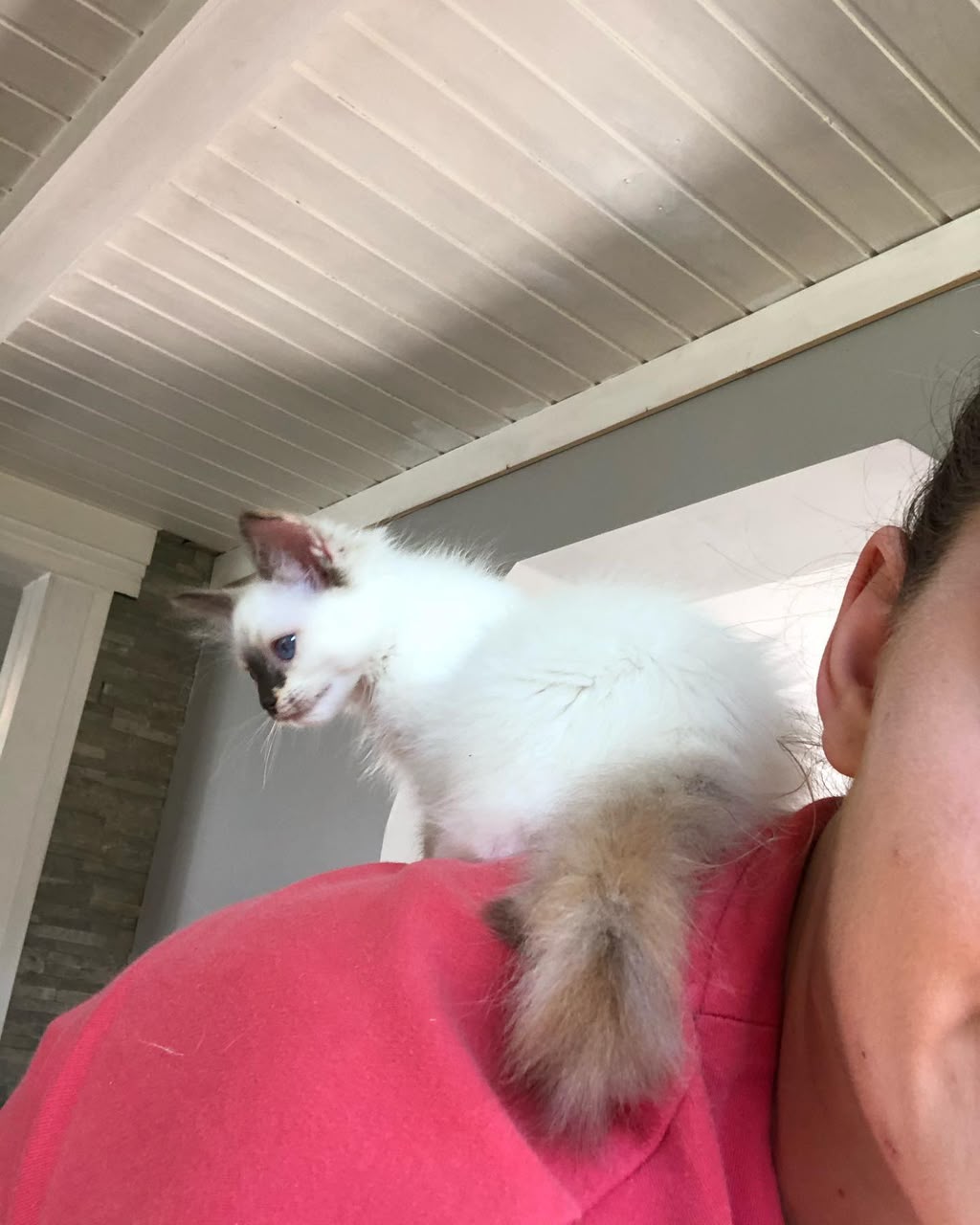
In the box
- The health record. Vaccinations, worming and flea treatment with every date, and the vet check.
- Microchip papers. The transfer form, so the chip is registered to you.
- Food. A week of what your kitten is eating now, so you can change over slowly.
- A blanket from the litter. It smells of mom and the littermates and it settles a kitten on the first night better than anything you can buy.
- A toy. One it already plays with.
- A kitten guide. Feeding, litter, the vaccination schedule, grooming and the first week, written down.
- Us. On the end of the phone and email for the life of the cat.
Before it leaves
- FVRCP vaccination. Protects against feline viral rhinotracheitis, calicivirus and panleukopenia, the three the core vaccine covers in the United States. The first dose is given at six to eight weeks and the second at ten to twelve weeks, both before the kitten leaves us. A third dose at fourteen to sixteen weeks is for your vet, and the record shows when it is due.
- Worming. From two weeks old and every two weeks until twelve weeks, then monthly. Each date is on the record.
- Flea treatment. Kitten-safe treatment before go-home day, with the product and date noted.
- Vet check. Every kitten is examined by our vet before it goes home: heart, eyes, ears, mouth, umbilicus and coat.
- Microchip. Implanted before the kitten leaves, registered in your name from day one so a lost cat comes back to you.
What to have ready
- A litter tray, uncovered to begin with, with the same litter we use, which is written in the guide.
- Food and water bowls, ceramic or steel, apart from each other and away from the tray.
- A tall scratching post, sisal, at least three feet, in the room the kitten will live in first.
- A carrier that opens from the top.
- A soft bed somewhere high, and a cardboard box somewhere low.
- A slicker brush or a steel comb.
- Wand toys rather than small toys that can be swallowed.
The first day
One room, door closed, with the tray, the food, the water, the bed and the box. Put the blanket from the litter in the bed. Sit on the floor and read. The kitten will come out of the box when it is ready, usually within an hour, and will use the tray because the litter smells like the one it knows. Do not carry it around the house on day one however much the children want to.
The first night
Most kittens cry for a few minutes and then sleep. Ours have been sleeping alone in a pen since five weeks, so they know how. A ticking clock or a radio turned low helps. If you want the kitten to sleep on your bed for the next fifteen years, start now; if you do not, do not start.
The first week
Open the room to the rest of the house one room at a time over three or four days. Keep the tray where it started for the first fortnight, then move it if you must, a meter a day. Feed what we sent, four small meals a day, and begin mixing in the new food on day three if you are changing. Book the third vaccination for the date on the record. Brush the kitten for one minute every day, whether it needs it or not, so that it is normal by the time the adult coat arrives. Introduce the dog on a lead, in a doorway, for two minutes, twice a day, for a week.
The first six months
Spaying or neutering is yours to arrange with your vet, and we ask that it is done by six months. Microchip details go in your name the day the kitten arrives, on the form we give you. The kitten will double in weight and then double again, and will lose its baby coat around four months and look scruffy for six weeks; that is normal. Ring us for anything, at any hour a reasonable person would ring.
Choosing the kitten
The kittens available now, and the price.
See the kittens we have now Ask about a kitten (928) 701-7668