Brown Ragdolls
Brown Ragdoll Cat
A brown Ragdoll is a seal point, or more rarely a chocolate point; brown is not a color the breed uses, but it is what most people see. This page explains which brown you are looking at, how to tell the two apart, why the brown deepens for years, and the seal kittens we have now.
Two browns
Seal is genetically black, and on a pointed cat black reads as a very dark, cool brown, nearly black at the ears and tail tip. The body shades to fawn. The nose leather and paw pads are dark brown. It is the most common Ragdoll color and the one in nearly every photograph of the breed. Pearl and Bambi are seal.
Chocolate is a true brown gene, and it reads as a warm milk-chocolate on the points with a lighter, ivory body. It never approaches black. The nose and pads are a cinnamon pink. Chocolate is much rarer than seal, needs both parents to carry it, and is often claimed for kittens that turn out to be seal. We do not currently breed chocolate and we say so.
How to tell them apart
- Tone. Seal is cool and dark, chocolate warm and light. Hold the cat near something black: a seal’s ears are close to it, a chocolate’s are nowhere near.
- The nose. Dark brown on a seal colorpoint, cinnamon pink on a chocolate. On a bicolor the nose is pink in both, so look at the paw pads instead.
- Age. In a kitten the two can look alike. By six months a seal has gone dark and a chocolate has not.
- Price and provenance. A chocolate from a breeder who cannot show you a chocolate parent is a seal.
Why the brown deepens
The pigment on a pointed cat keeps forming wherever the skin is cool enough, and as a cat grows and its coat thickens, more of it qualifies. So a seal darkens on the points for three or four years and the body shades from white through cream to fawn, darker on the back. A seal in winter is darker than the same cat in summer. The kitten you buy is the lightest that cat will ever be, and buyers who wanted a "light brown" Ragdoll are sometimes surprised by the adult. If you want a Ragdoll that stays light, you want a blue or a cream.
Brown and white: seal bicolor
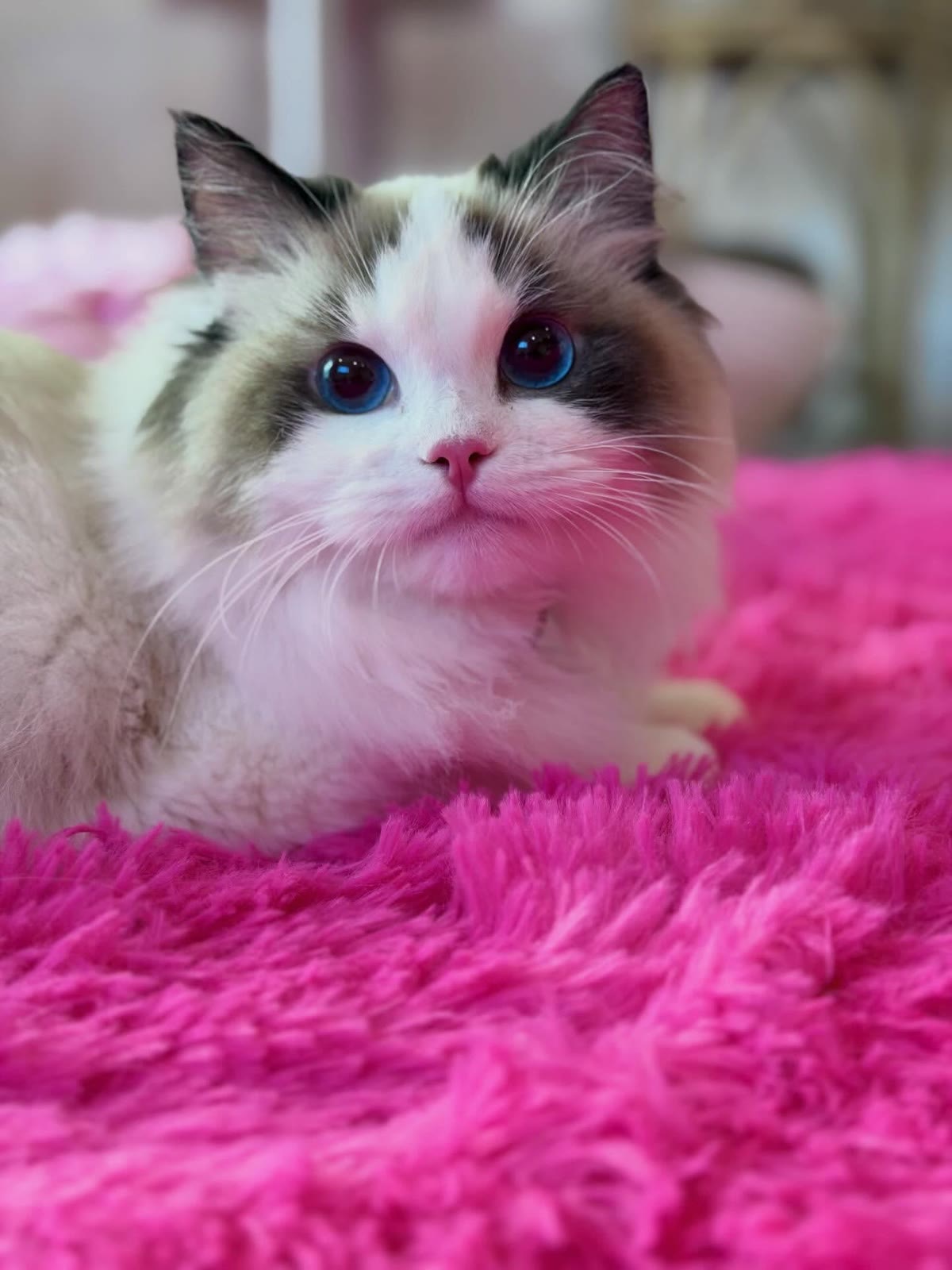
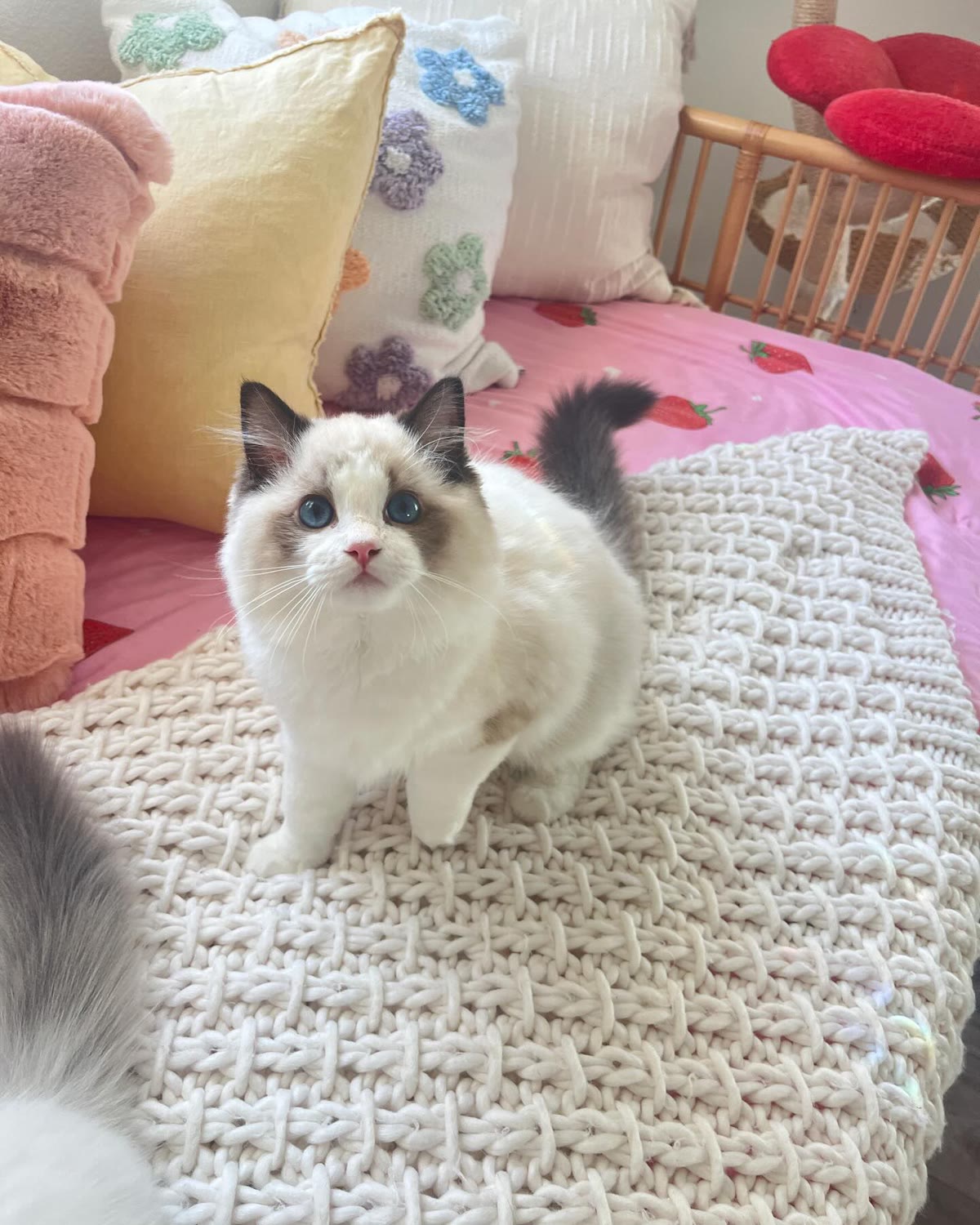
Most people searching for a brown and white Ragdoll are describing a seal bicolor, which is exactly what Pearl and Bambi are: dark brown ears, mask and tail, a white inverted V on the face, white legs and a white belly. The bicolor pattern, explained.
Brown-eyed brown cats
A pointed Ragdoll always has blue eyes. A brown cat with green or gold eyes and a Ragdoll coat is a mink or sepia Ragdoll, lines developed outside the traditional standard, or a crossbreed. Neither is a fault in a pet, but neither is what this page describes, and a seller who cannot tell you which you are looking at is not one to buy from.
Seal kittens available now
2 available now, $800 each.
01
Is a brown Ragdoll rare?
No. Seal, the common brown, is the most common Ragdoll color of all. Chocolate, the uncommon brown, is rare and most "chocolate" kittens advertised cheaply are seals.
02
Do brown Ragdolls have brown eyes?
Never. A pointed Ragdoll has blue eyes whatever its coat color. A brown-eyed "Ragdoll" is a mink, a sepia or a cross.
03
Will a brown kitten stay the same brown?
No. It will darken for three or four years and the body will shade from white to fawn. The kitten in the photograph is the lightest that cat will ever be.
Ask about a seal kitten
Pearl and Bambi, $800 each. What that includes.
See the kittens we have now Ask about a kitten (928) 701-7668